User Interface and Design
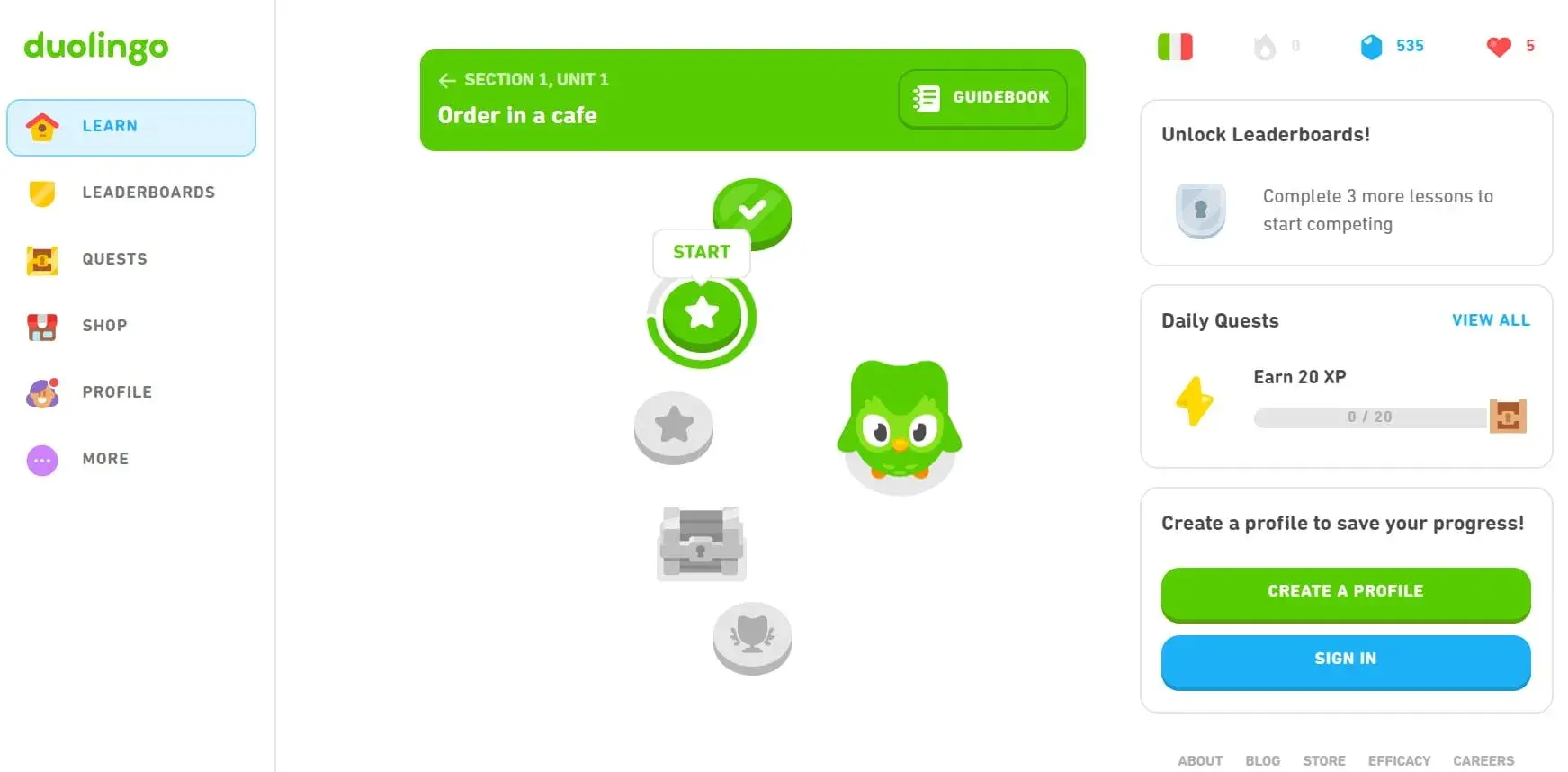
Starting with the UI, I have to say Duolingo has always impressed me with its design and appealing presentation. However, beyond a good design, I’m focusing on how the app improves my speaking skills, which is the main aspect of this review.
User Path and Leaderboard
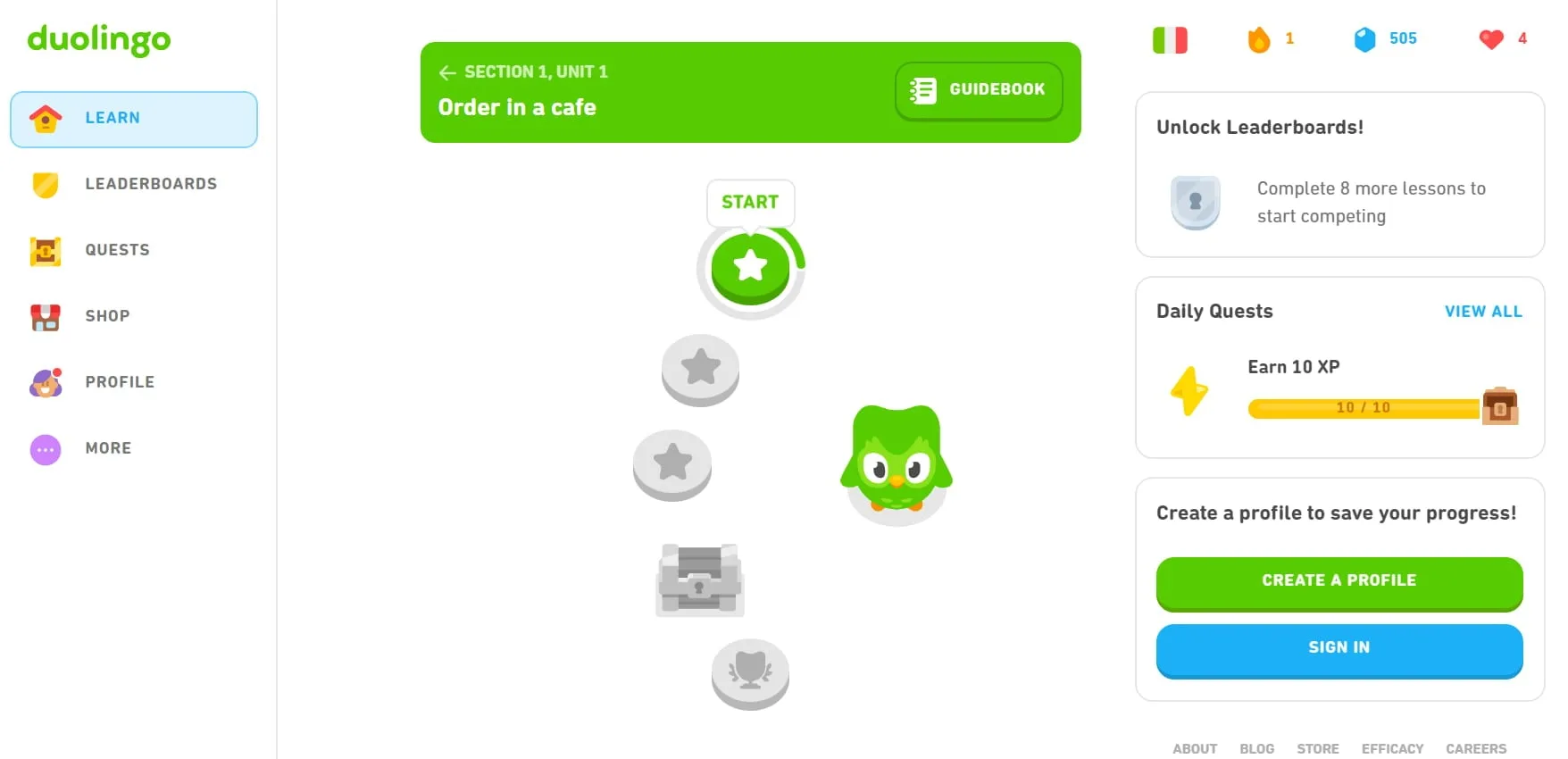
The main interface showcases a path that organizes lessons in a linear, progressive way. You need to follow this path to complete the course.
This approach may limit the user's ability to select freely the topics they want to review. Users may find it restrictive if they want to revisit specific lessons or jump ahead to areas they are particularly interested in or need more practice with.
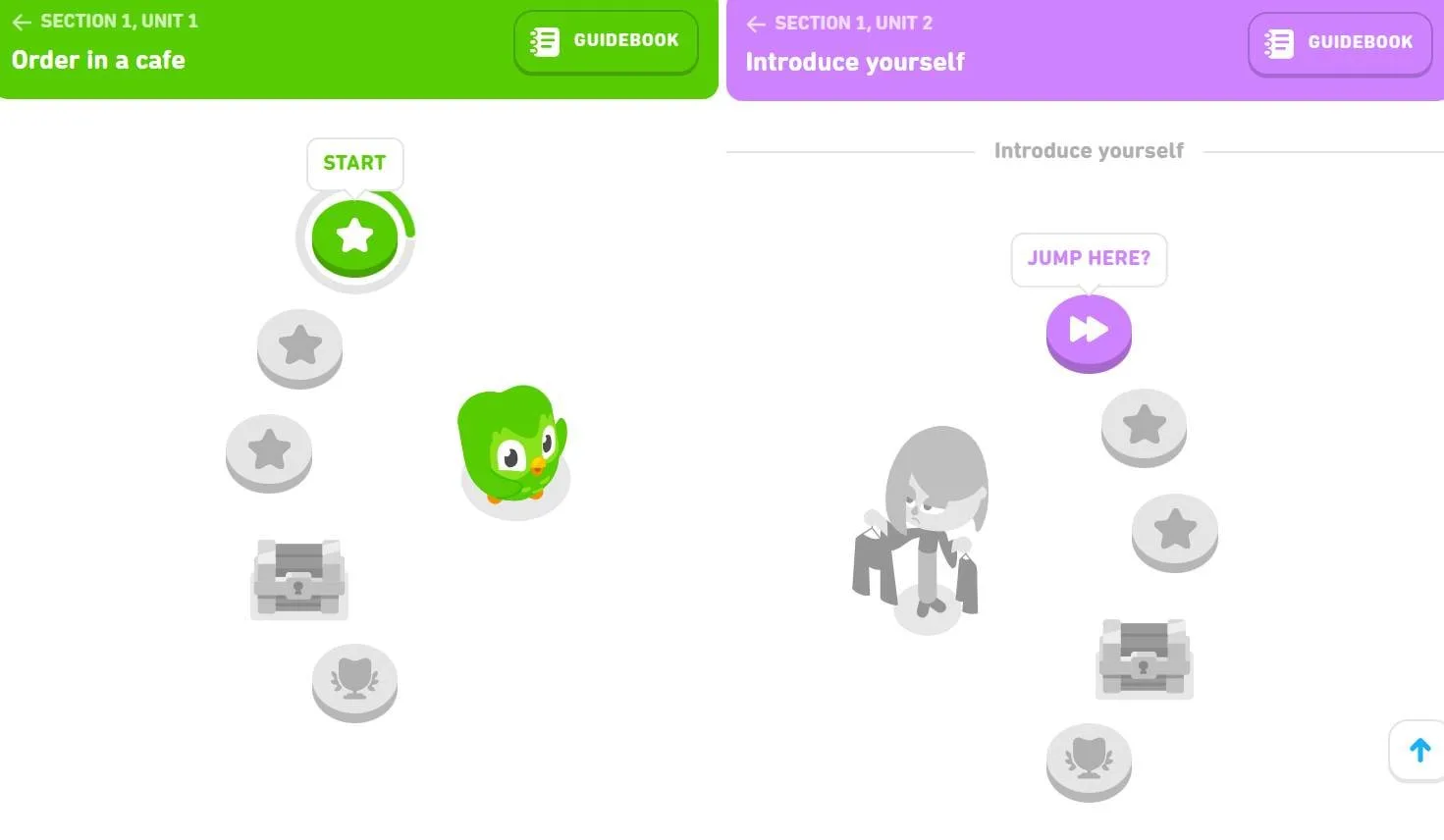
There’s also a leaderboard which I was obsessed with during my earlier usage of Duolingo. The gamification elements, like badges, really kept me engaged for a long time.
I tried to learn with Duolingo for a long time, and after using the app for about five or six years, I found the leaderboards and badges engaging but ultimately insufficient, as I haven't used it at all in the past year and I felt it didn't do much in order to improve my conversational skills.
There is a lack of depth that somehow manages to remain hidden behind all its vibrant colors and engaging characters.
This lack of depth becomes apparent when learners attempt to apply their knowledge in real-world situations, only to realize that their conversational and grammatical skills are not as robust as the app's interface led them to believe.

Engagement Tools and Settings
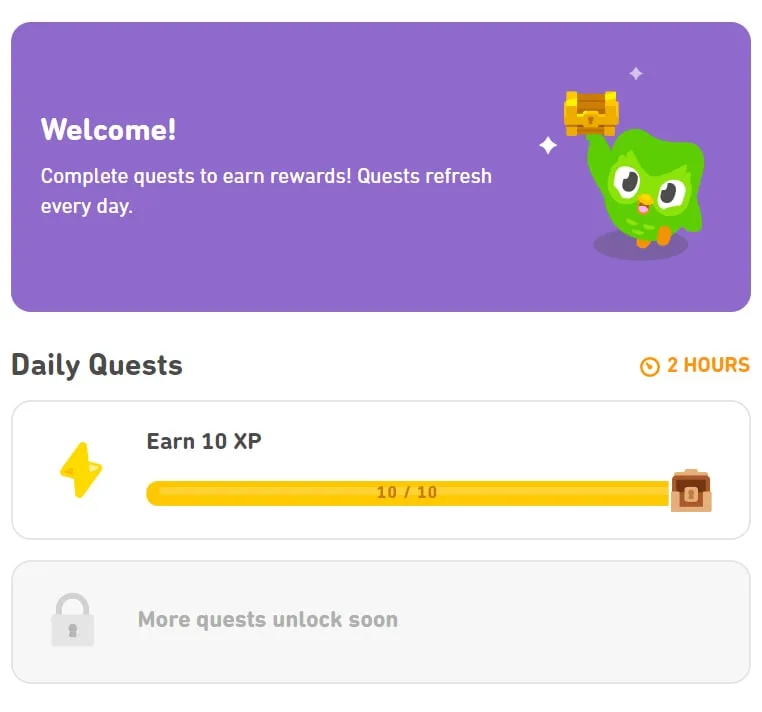
Duolingo does a great job of keeping you engaged through activities like quests and in-app purchases. The app also allows you to personalize your experience through a vast array of options in the settings section.
Lessons Structure: Focus on Translation
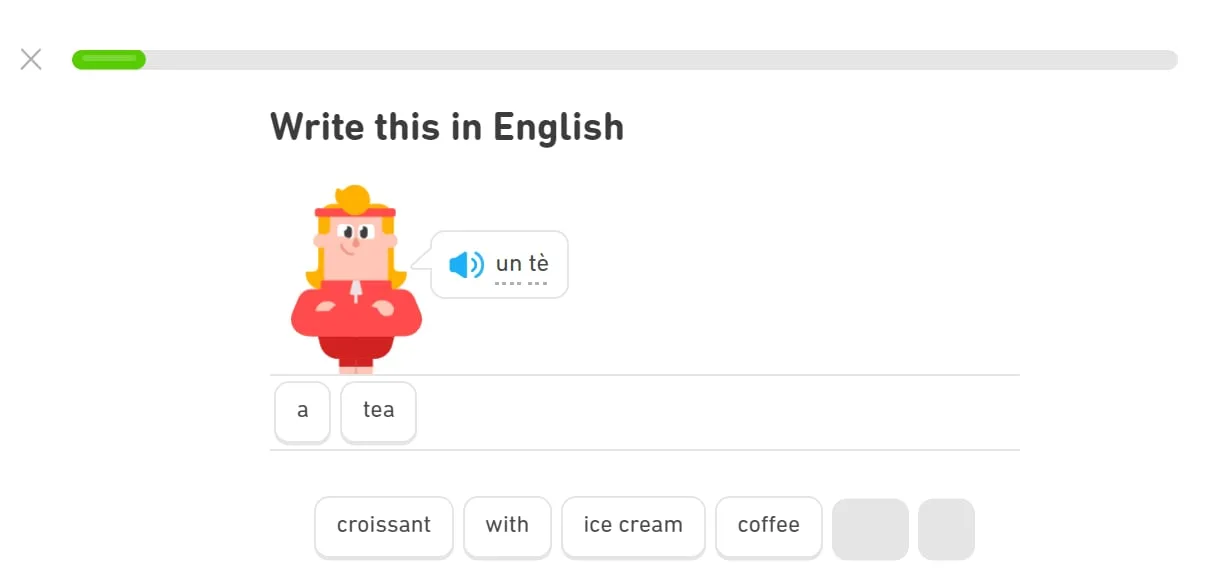
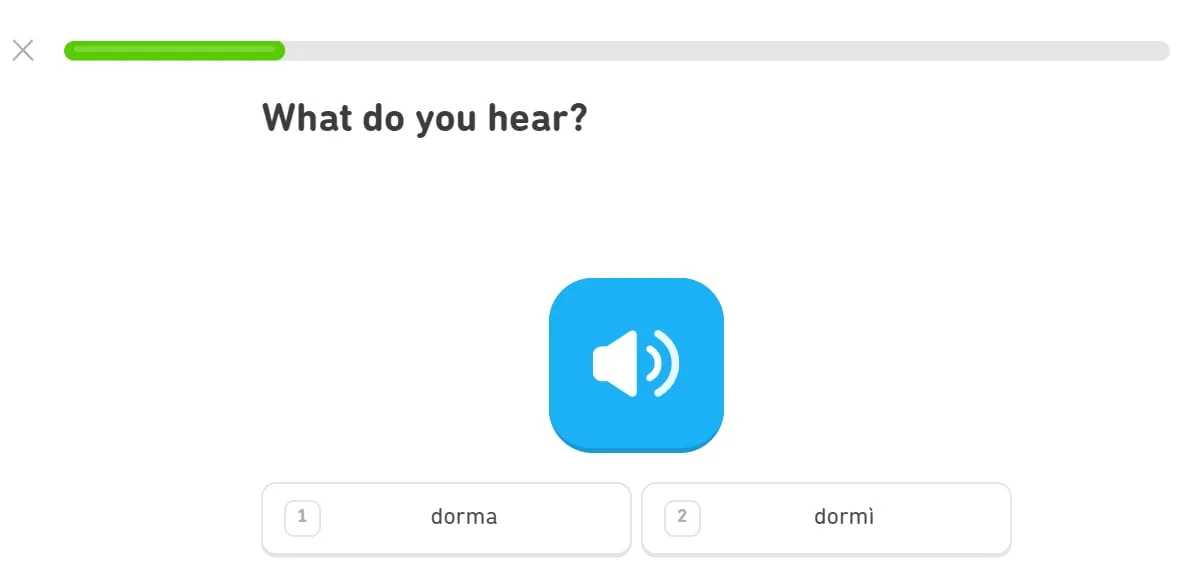
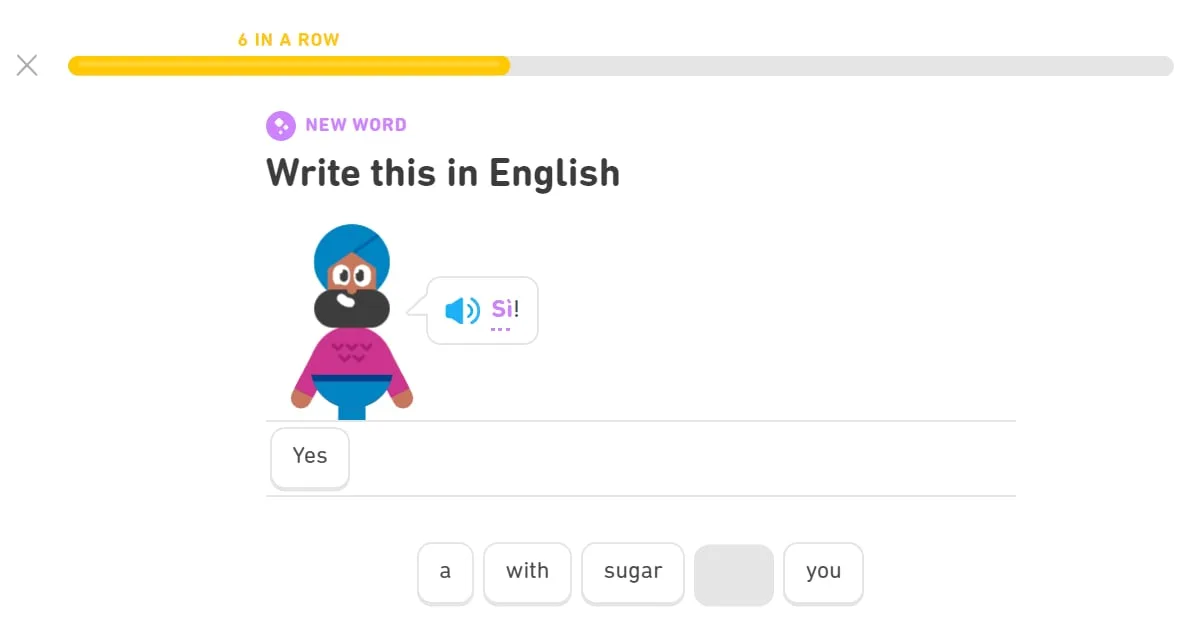
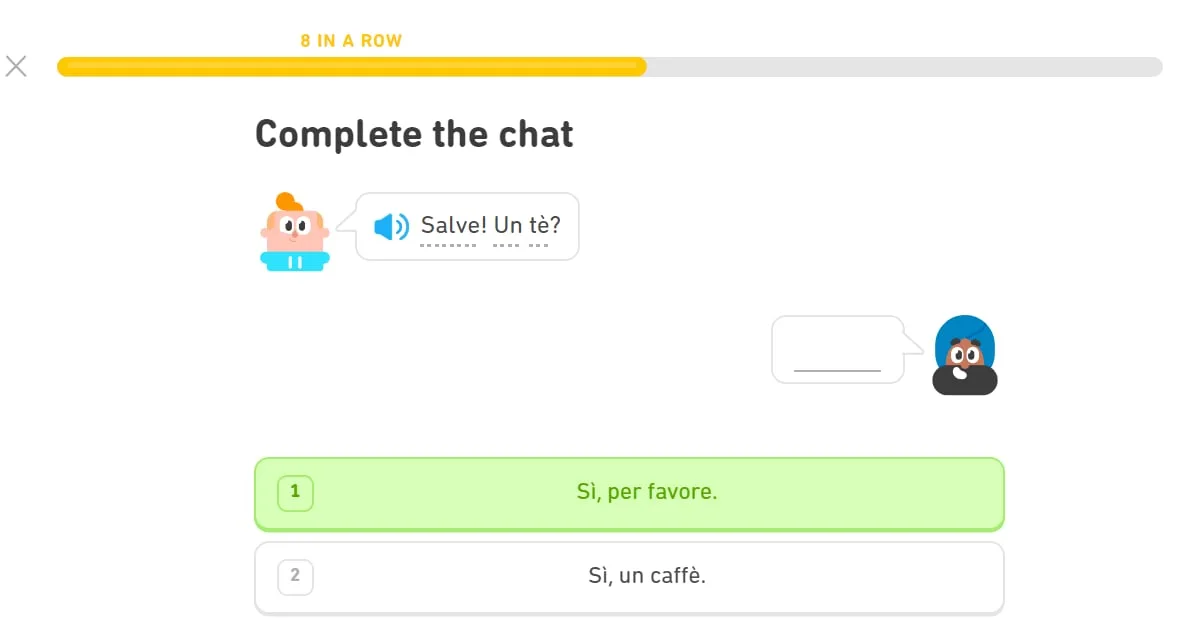
Historically, Duolingo has emphasized translations and typing rather than speaking. On this occasion, when I tried a lesson, it presented me with exercises such as matching pairs, listening, and then translating and typing. These exercises are useful for beginners who need to understand the meaning of words, but they fall short when it comes to enhancing speaking skills.
Lack of Speaking Exercises
The emphasis on translation isn’t necessarily bad, but it’s limited. Repetition and translation are great for learning vocabulary; however, for improving speaking skills, verbal exercises are essential.
During this lesson, I found that only one out of fifteen questions required actual speaking. Most speaking attempts depended on the user's initiative, not the app's instruction.
Improvements in Speaking Activities
A small portion of the lessons included speaking exercises, which I found more dynamic and engaging. These exercises made me think more and didn't just involve simple translation. Another notable improvement was an exercise focused on phonetics.