
Ling
Ling Italian Review
Apr 11, 2026 · 18 features · 14 languages · iOS, Android, Web
- Ling scores 6.8/10; strongest area: User experience, weakest area: Course quality.
- Best suited for: Beginners looking for light, gamified Italian practice.
- Main upside: Fun and engaging gamified lessons; main tradeoff: Limited grammar explanations.
Score
Course quality
65/100User experience
82/100Pricing
70/100
- Fun and easy to use Good for beginners Limited grammar explanations Not enough depth Some bugs reported
Pros
- Fun and engaging gamified lessons
- Native speaker audio included
- Easy to use interface
- Wide range of languages
- Short lessons support consistency
Cons
- Limited grammar explanations
- Not ideal for advanced learners
- Some content inaccuracies
- Repetitive structure across languages
- Speaking feedback lacks depth
At a glance
- Made by
- Simya Solutions
- Concept
- Gamified language app with short lessons and interactive exercises.
- Platforms
- iOS, Android, Web
- Levels
- (A1) Beginner, (A2) Elementary, (B1) Intermediate, (B2) Upper-intermediate
- Languages taught
- Italian, Spanish, French, German, Portuguese, Russian, Japanese, Korean, Thai, Arabic, Hindi, Greek, Turkish, Vietnamese
- Best suited for
- Beginners looking for light, gamified Italian practice.
Pricing
- Monthly
- 8.99US$
- Yearly
- 54.99$
- Lifetime
- 149.99$
Free trial: Available; Credit card needed; 7 days
Refunds: Not available
Feature checks
Spaced repetition
55/100Customization
60/100Focus on learning
65/100Personalization
50/100Sentence accuracy
70/100Sentence relevance
75/100Variety and depth
65/100Audio quality
85/100Speaker's quality
65/100Speaking practice
65/100Ease of use
90/100Interface and design
88/100Performance
75/100Learning path
Speech recognition
Offline access
Grammar notes
User-generated courses
Conclusion
Use Ling for daily vocabulary and listening practice, and combine it with a more structured resource for grammar and speaking development.
Alternatives
SpeakTwice is the only app that gets your to speak Italian all the time. It comes with hundreds of grammar lessons and readings to listen and repeat, plus an AI tutor to review the courses and practice conversation. See the full review.
FAQ
Is Ling good for learning Italian?
Can Ling make you fluent in Italian?
Does Ling teach grammar?
Is Ling free?
Does Ling include speaking practice?
Compare Ling with other Italian learning apps
See the published side-by-side comparisons that include Ling for Italian learners, or browse the full comparison hub.
Walkthrough
Intro
If you’re looking for a Ling Italian review, you’re probably comparing apps and trying to decide which one is actually worth your time. So in this video, I’m going to walk you through how Ling works specifically for learning Italian, what the experience feels like inside the app, and whether it makes sense depending on your level and goals.
Ling is a gamified language learning app that offers more than 60 languages, including Italian, and it focuses on short, interactive lessons that feel more like a game than a traditional course.
Setup
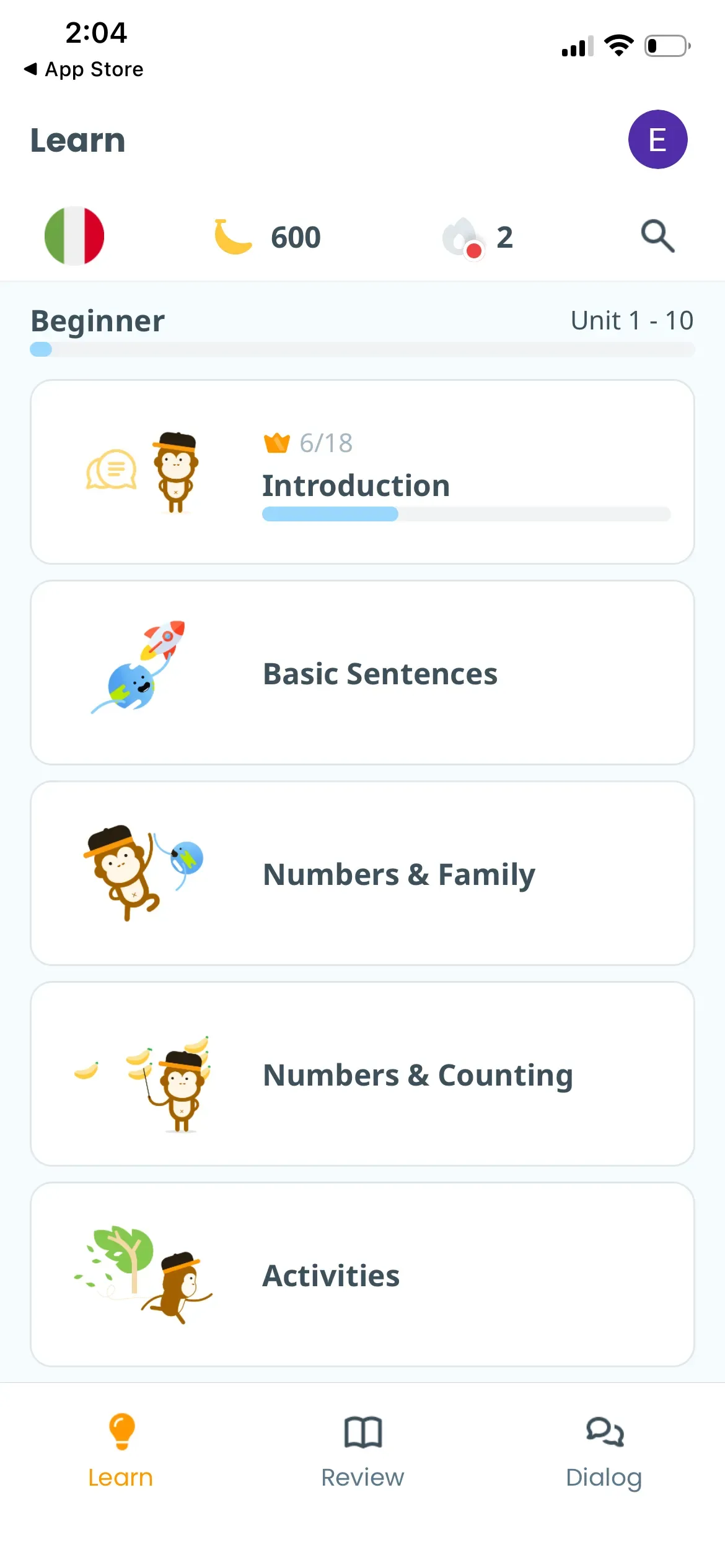
When I open the Italian course in Ling, I immediately see that everything is divided into levels — Beginner, Intermediate, Upper-Intermediate, Advanced, and Expert. Inside each level, there are themed units, and each unit contains four vocabulary lessons, a speaking activity, and a final exam.
There’s no placement test, so I can jump into any lesson I want, which I personally like because it gives me flexibility. The interface is clean, colorful, and very intuitive. I don’t need instructions to understand what to do. I just tap into a lesson and start learning.
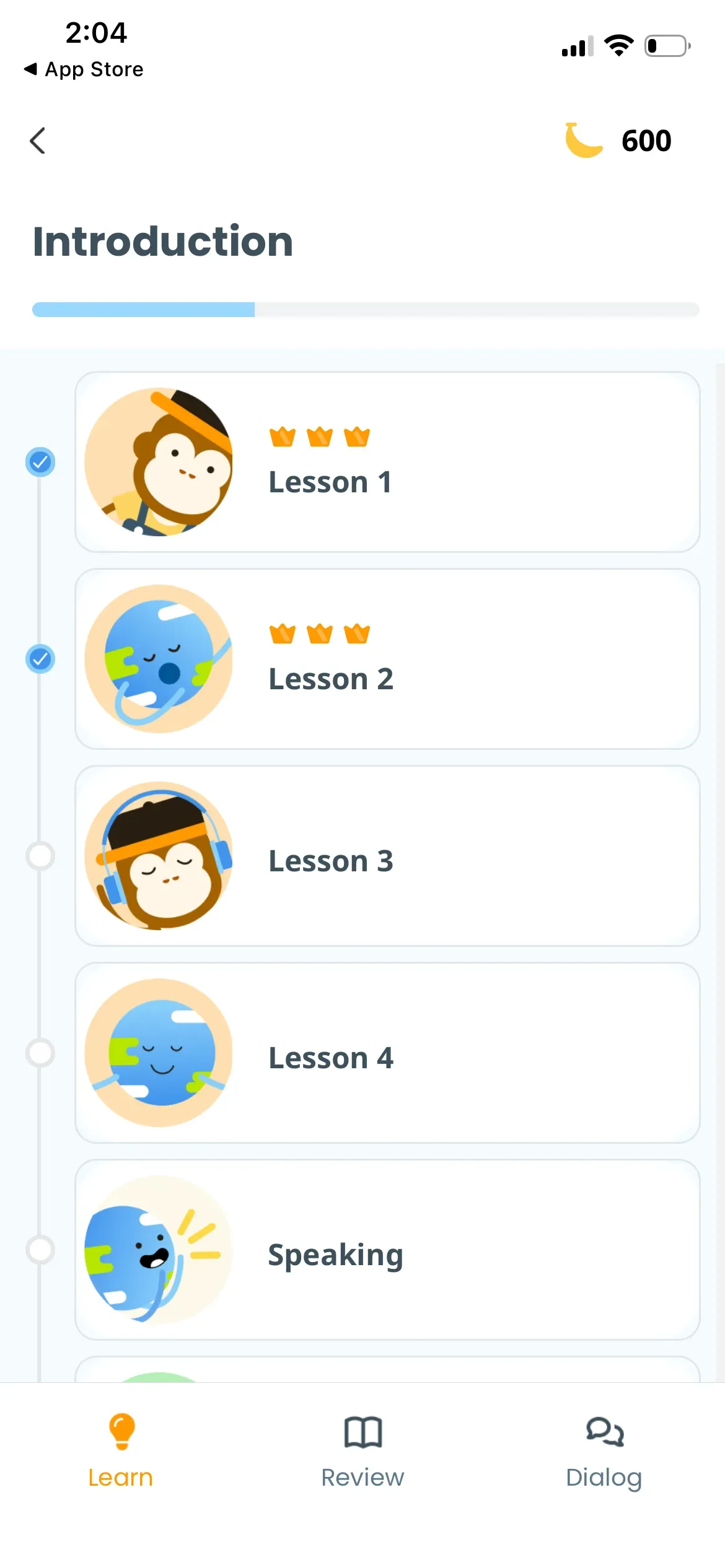
The lessons are short, which makes it easy to stay consistent. I can finish one in just a few minutes, so it doesn’t feel overwhelming or time-consuming.
Features
Each Italian lesson introduces a set of new vocabulary words with translations, example sentences, and native speaker audio. I like that I can replay the audio and even slow it down, which helps with pronunciation and listening.
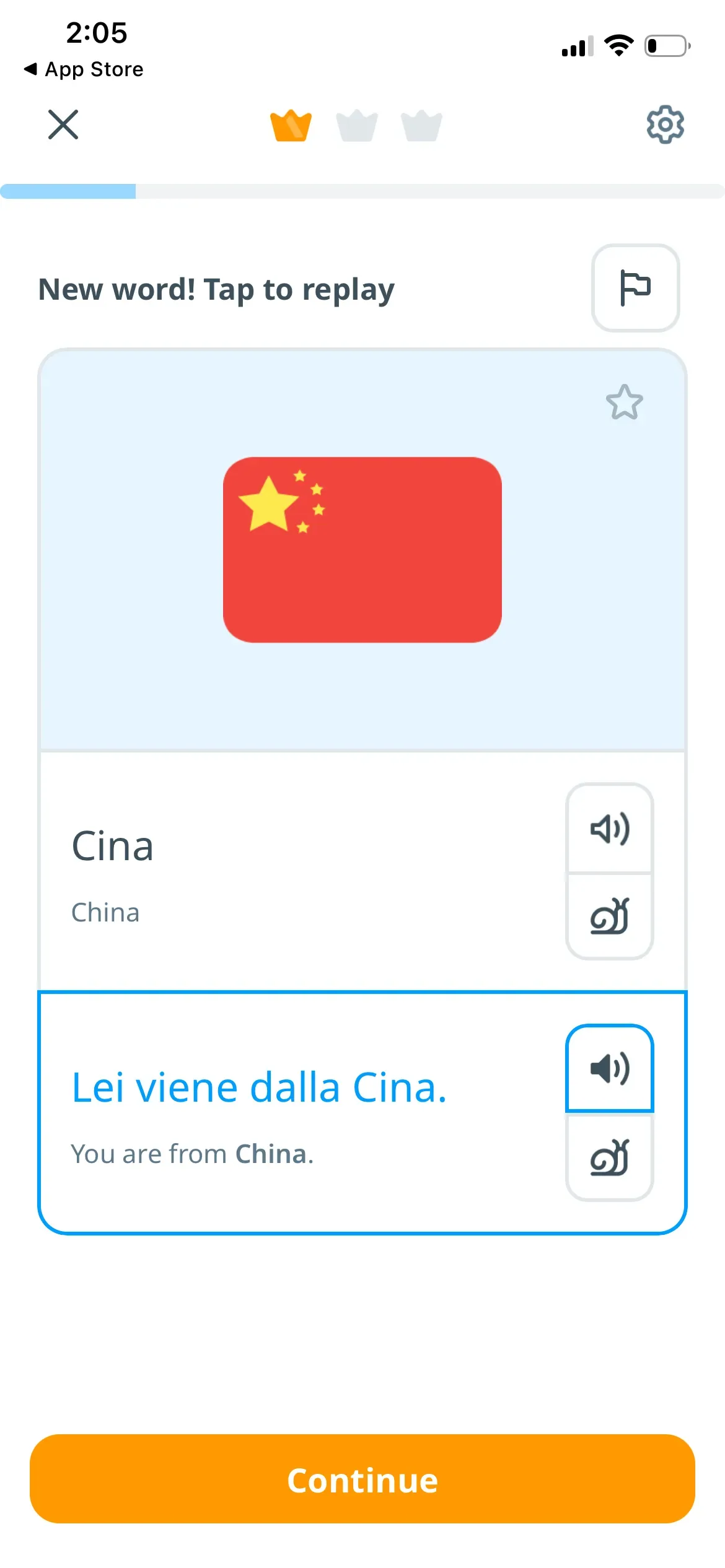
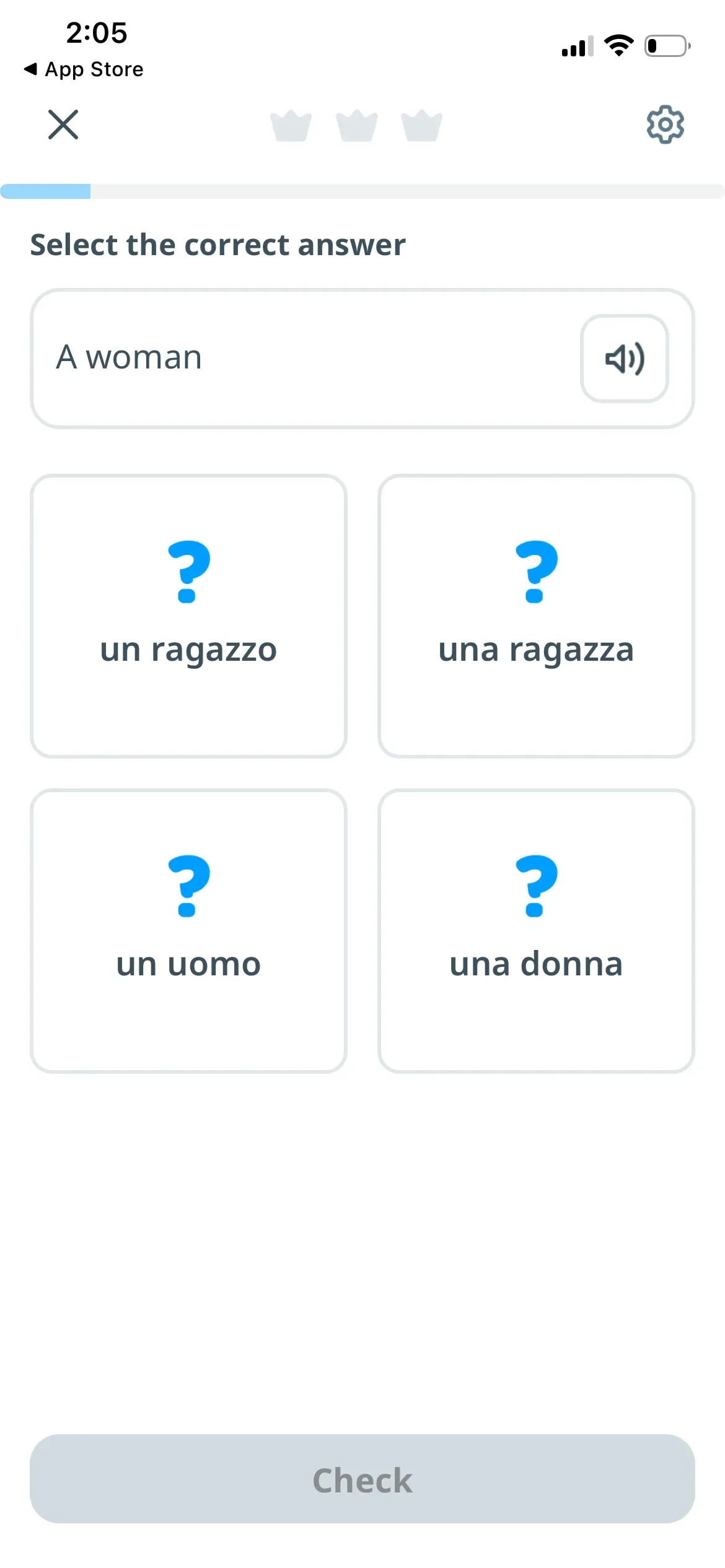
After seeing the vocabulary, I go through different types of exercises like matching, sentence ordering, spelling practice, and multiple choice. The variety keeps things moving, and I didn’t feel bored repeating the same exact activity over and over.
At the end of each lesson, there’s usually a short dialogue in Italian. I found this useful because I can hear the vocabulary used in context, but sometimes the dialogue includes words that weren’t fully explained earlier. Since Ling doesn’t provide detailed grammar explanations inside the Italian course, I sometimes have to figure out patterns on my own.
That’s something important to understand: grammar in Ling is mostly implicit. I don’t see structured grammar lessons or deep explanations about verb conjugations or sentence structure. Instead, I’m expected to absorb it through exposure. For some learners that feels natural, but if you prefer clear rule breakdowns, you may need another resource alongside it.
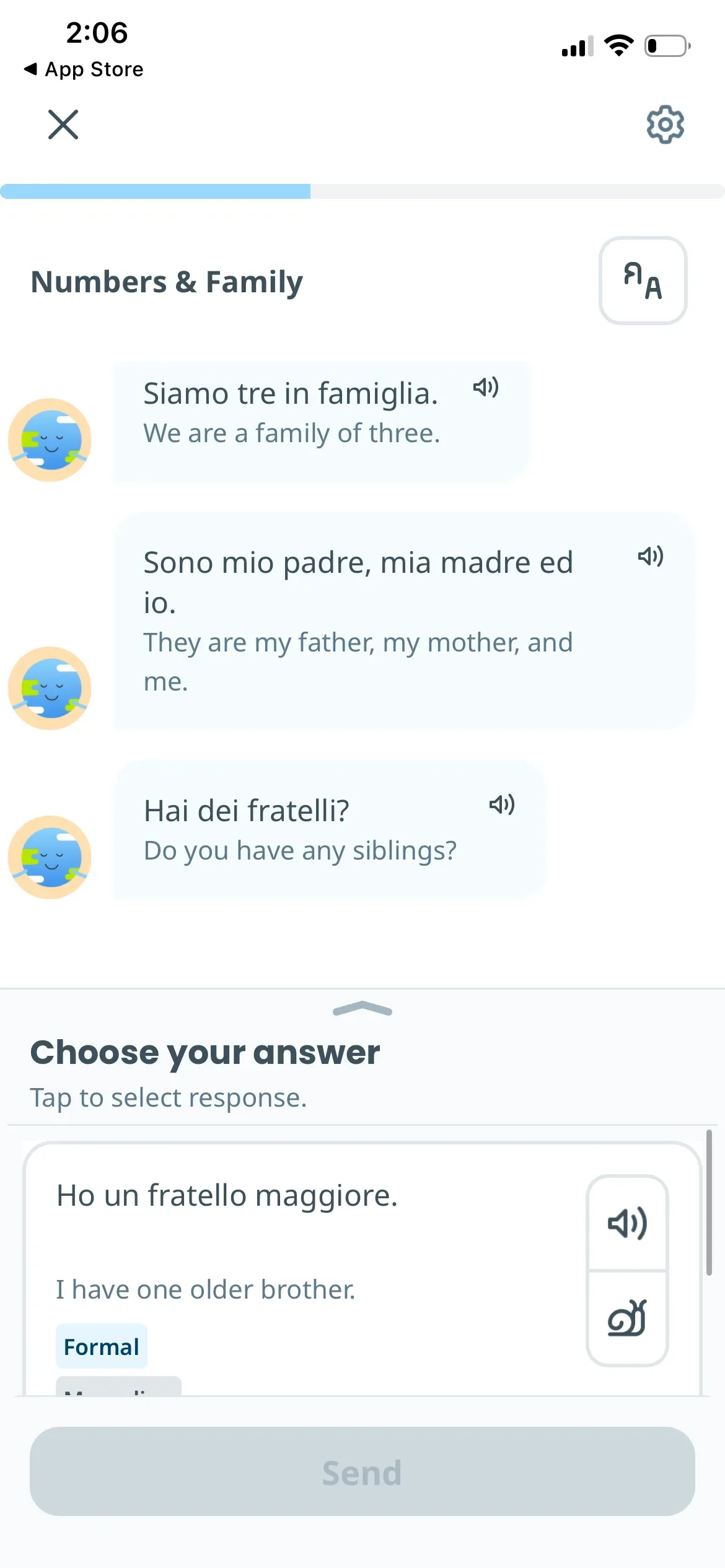
Ling also includes a speaking feature that uses voice recognition. I can repeat phrases out loud and the app evaluates my pronunciation. The feedback isn’t extremely detailed, but it does push me to actually speak Italian instead of just tapping answers. There’s also a chatbot-style conversation feature where I select responses in a guided dialogue. It’s more of a structured interaction than a real conversation, but it helps activate vocabulary.
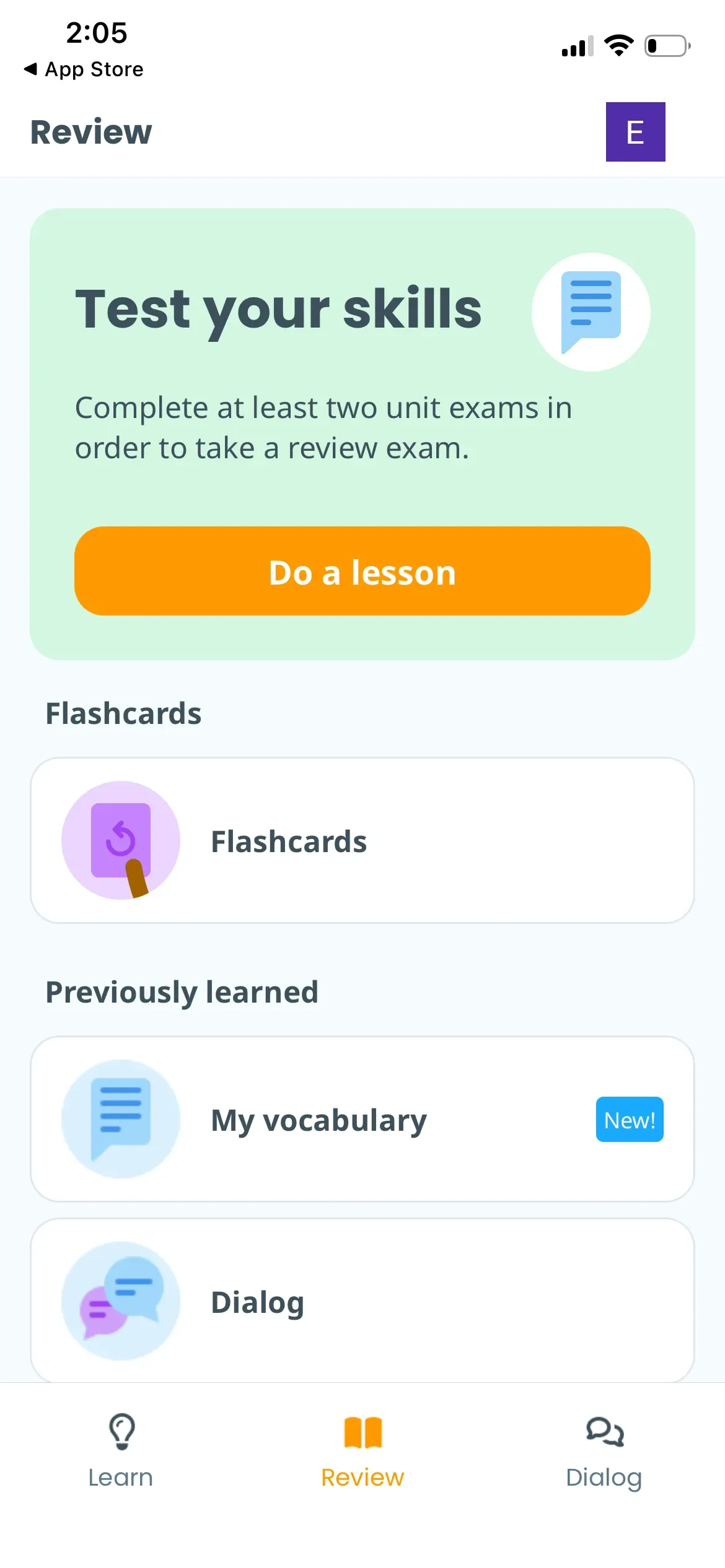
In terms of depth, even though the levels go up to “Expert,” the Italian course feels strongest at the beginner to lower-intermediate stage. I see it working best around A1 to A2, especially for vocabulary building and basic sentence structure exposure. I wouldn’t personally rely on it alone to reach an advanced level.
Ling is subscription-based, with monthly, yearly, and lifetime plans, and you can try the first units for free. The pricing is fairly standard compared to other gamified language apps.
Overall Thoughts
Overall, Ling makes learning Italian feel light and flexible. I like that I can move freely between lessons, practice in short sessions, and hear native speaker audio consistently. It’s structured enough to give direction but not so rigid that it feels stressful.
At the same time, it’s important to see it for what it is. It’s a vocabulary-focused, gamified practice tool rather than a deep, comprehensive Italian program. If your goal is building a foundation and staying consistent with daily exposure, it can work well. If you’re aiming for more advanced fluency or want detailed grammar instruction, you’ll probably want to combine it with something else.