Busuu Italian is a language app that stands out with some unique features, including real videos of native Italian speakers and an interesting feedback mechanic. However, despite its strengths, the app falls short in one crucial area: helping users improve their speaking skills.
The lack of dedicated speech exercises limits its effectiveness for those looking to boost their conversational abilities.
Exploring the Navigation Bar
Busuu is divided into several key sections. Let's have a look:
Learn
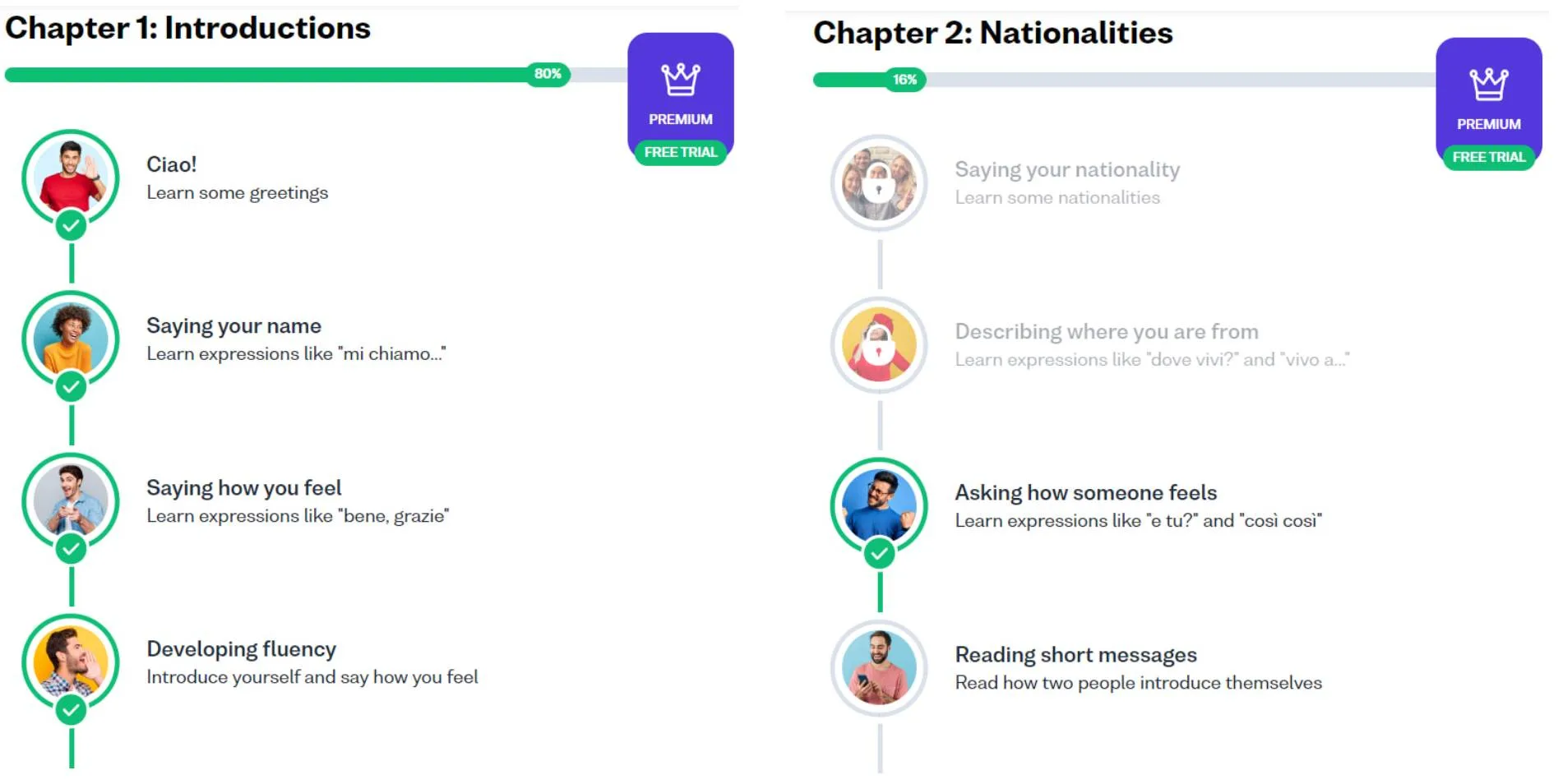
This section contains the chapters you can do in order to progress, starting with beginner-friendly topics such as "introductions", "nationalities", and "family".
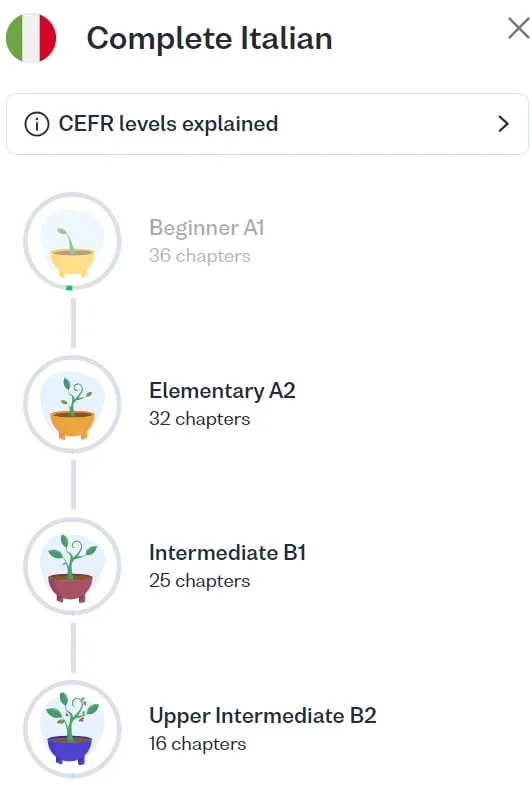
For Italian, the app covers levels A1 to B2 (beginner to upper intermediate).
Review
This section is divided into two parts. One dedicated to grammar and the other one focused on vocabulary.
Grammar Section
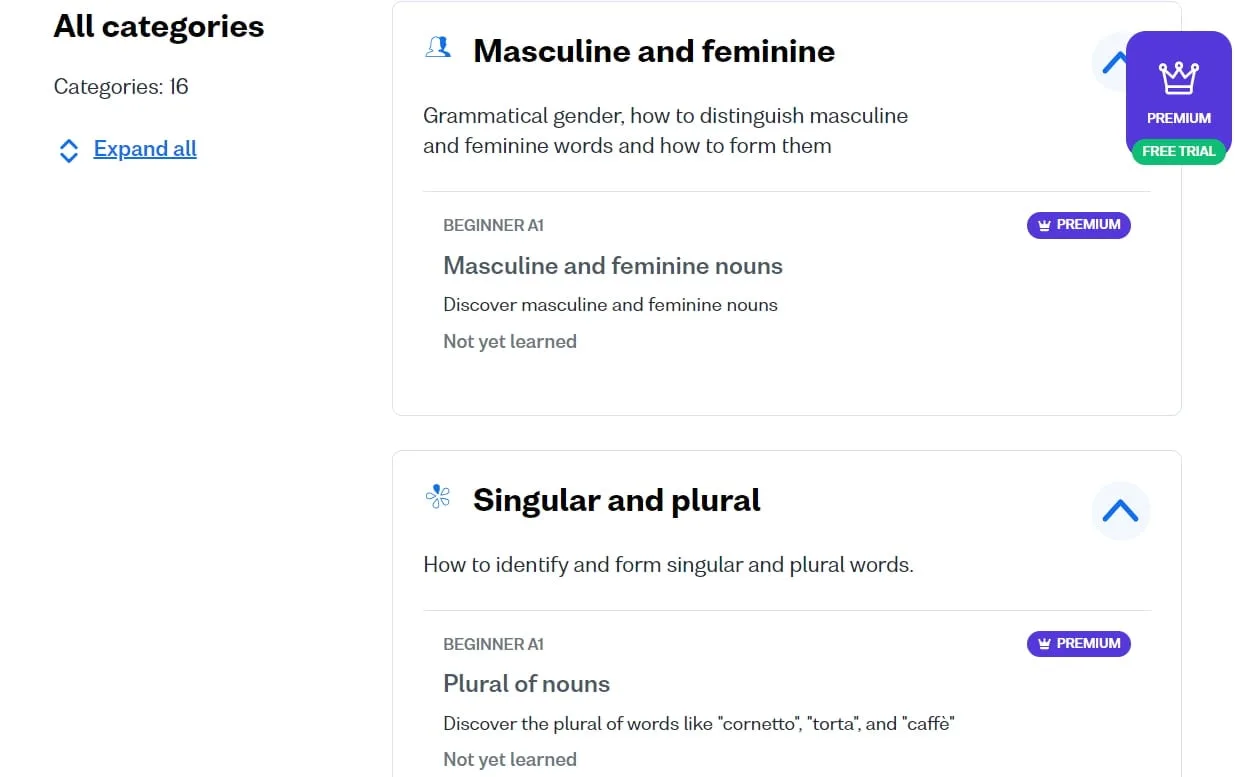
The grammar section contains several categories that aim to provide a more comprehensive understanding of basic Italian grammar. However, much of the content is locked behind a paywall.
Vocabulary Section
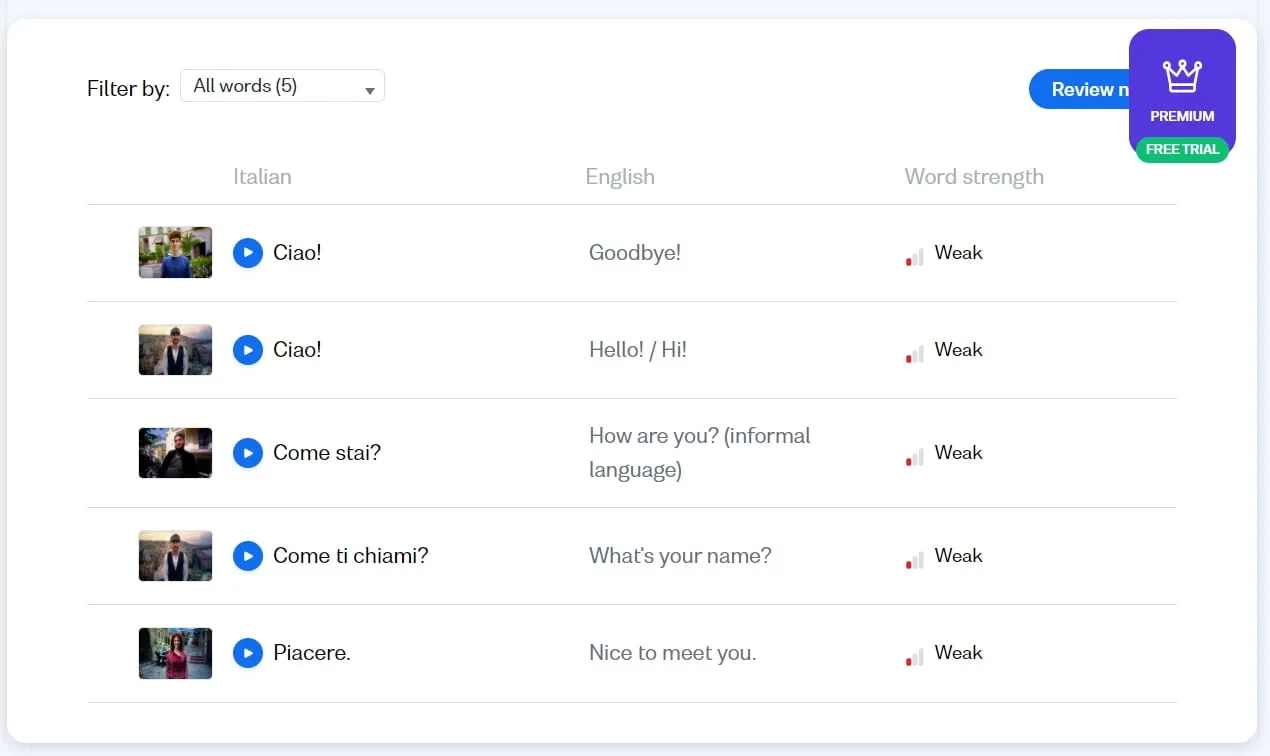
This section saves new words learned from previous lessons, creating a personalized list for easy review and vocabulary retention.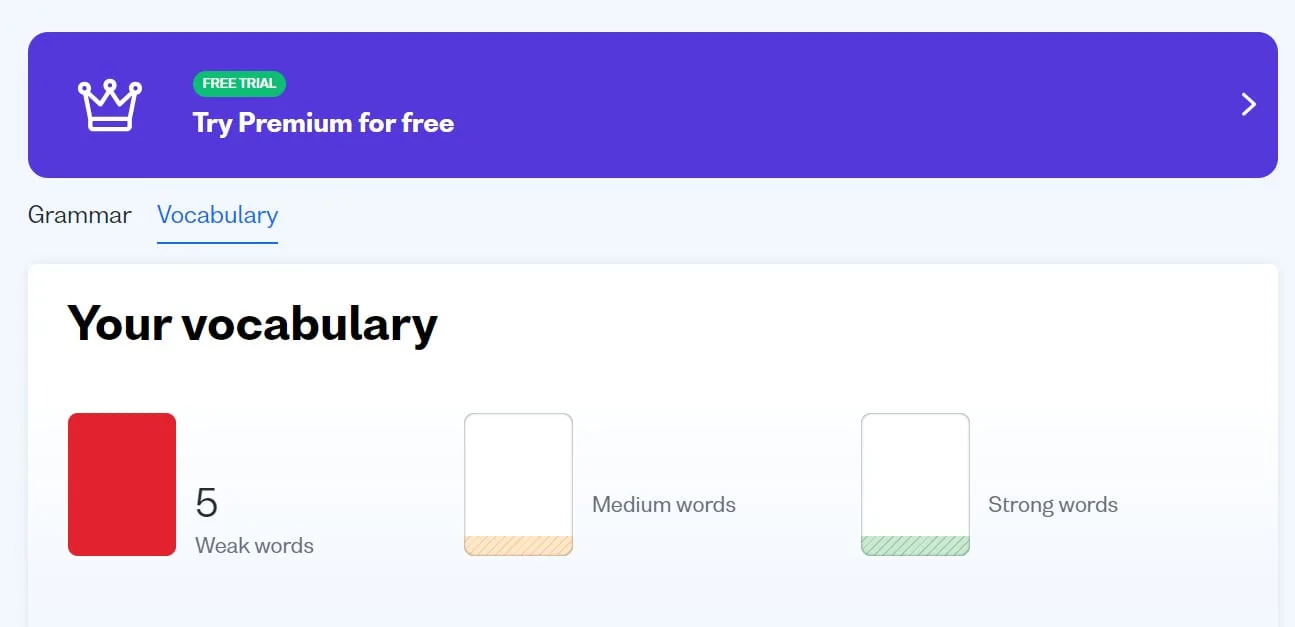
This feature allows you to keep track of your expanding vocabulary. By consistently tracking your progress, you can determine which words you've mastered and which ones require additional practice.
Community
This section contains one of the most interesting features Busuu has to offer. It allows you to submit your audio or text for review by other students.
While this peer feedback is a nice touch, I think feedback from actual teachers or tutors is far more helpful. Their expertise and experience can provide more accurate, detailed, and constructive insights, which are crucial for effective learning and improvement.
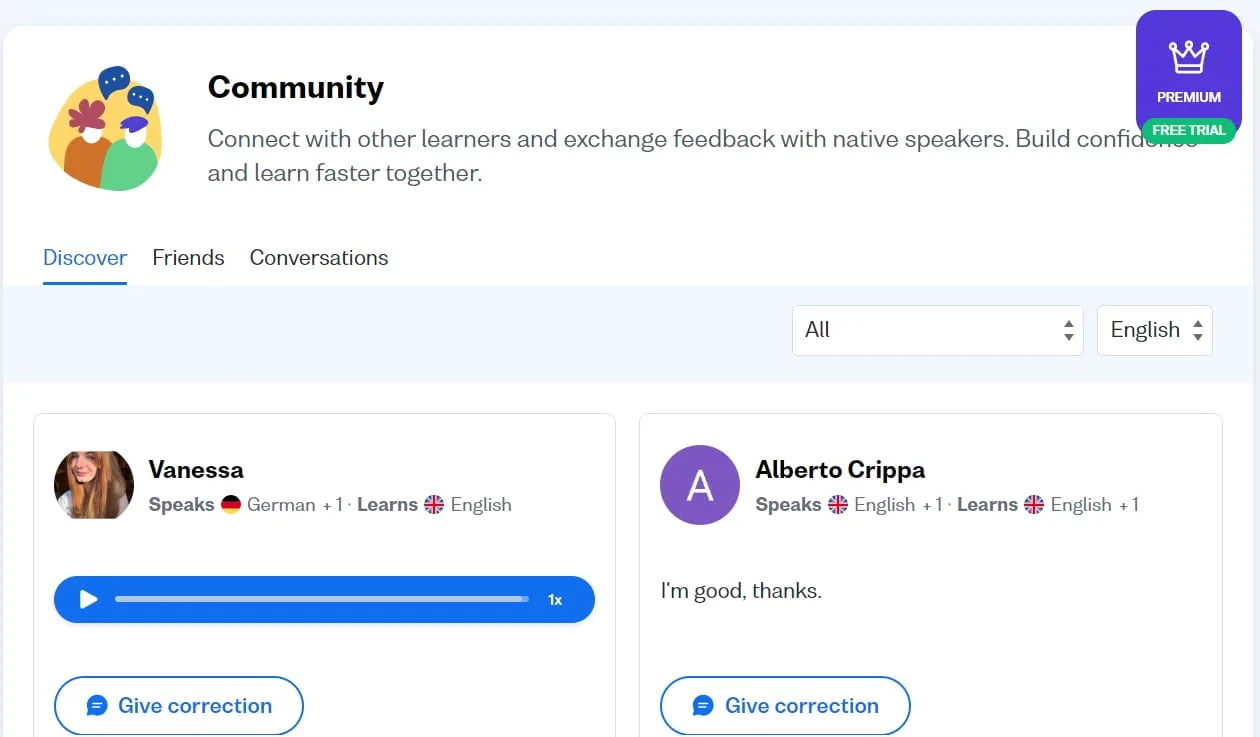
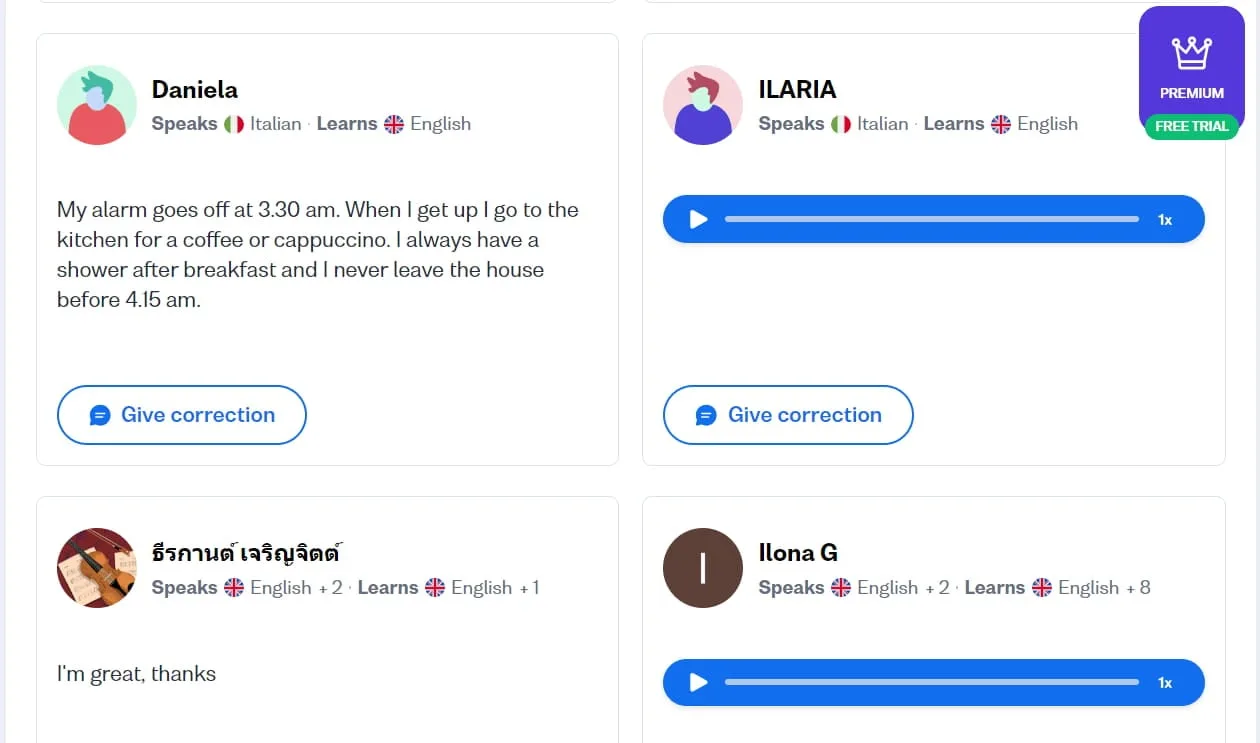
While exploring the community section, I realized that despite not being a native English speaker, I was still asked to correct the work of people learning English. This was surprising to me, as I expected Busuu to have a better way to determine whether a person is proficient enough to correct other people's work or not.
It's also important to notice that being a native speaker does not necessarily mean having the expertise to provide accurate corrections. This experience emphasized the importance of expert feedback for effective language learning.
Testing a Lesson
Now, let's have a look at an actual lesson. I chose the lesson "Say How You Feel," which teaches expressions like bene and grazie.
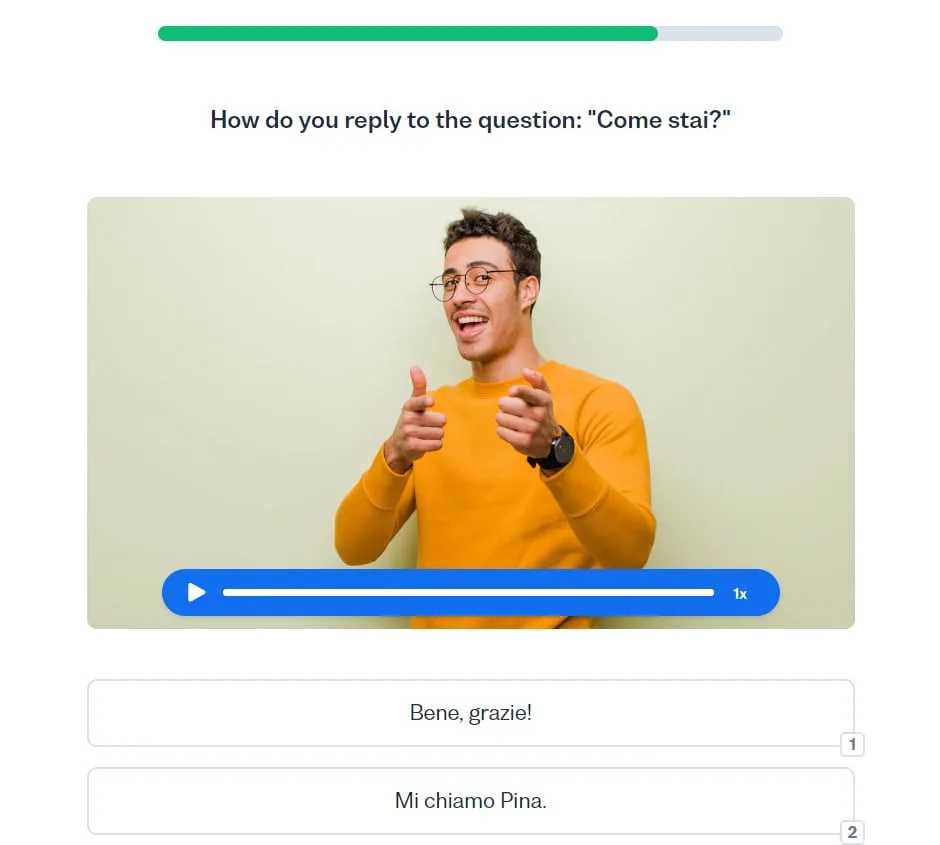
Lesson Content
The lesson starts with a video featuring native speakers saying the phrases. This is a nice touch that I haven't seen in other apps.
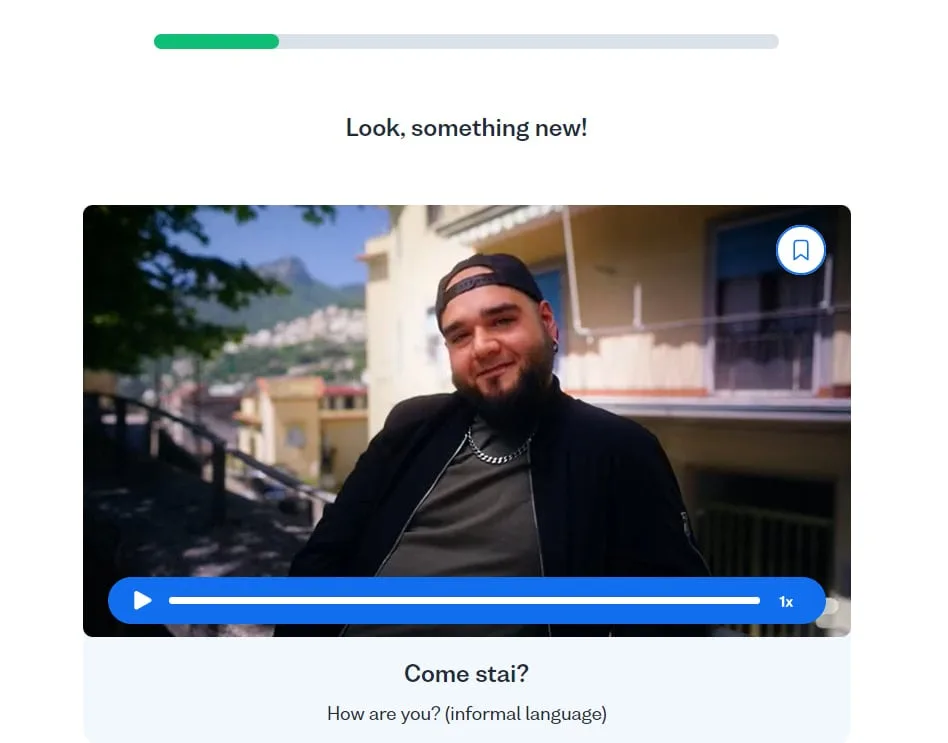
The exercises involve listening, repeating, and completing phrases. The format is similar to Duolingo but with the added benefit of having videos where actual people talk to the user.
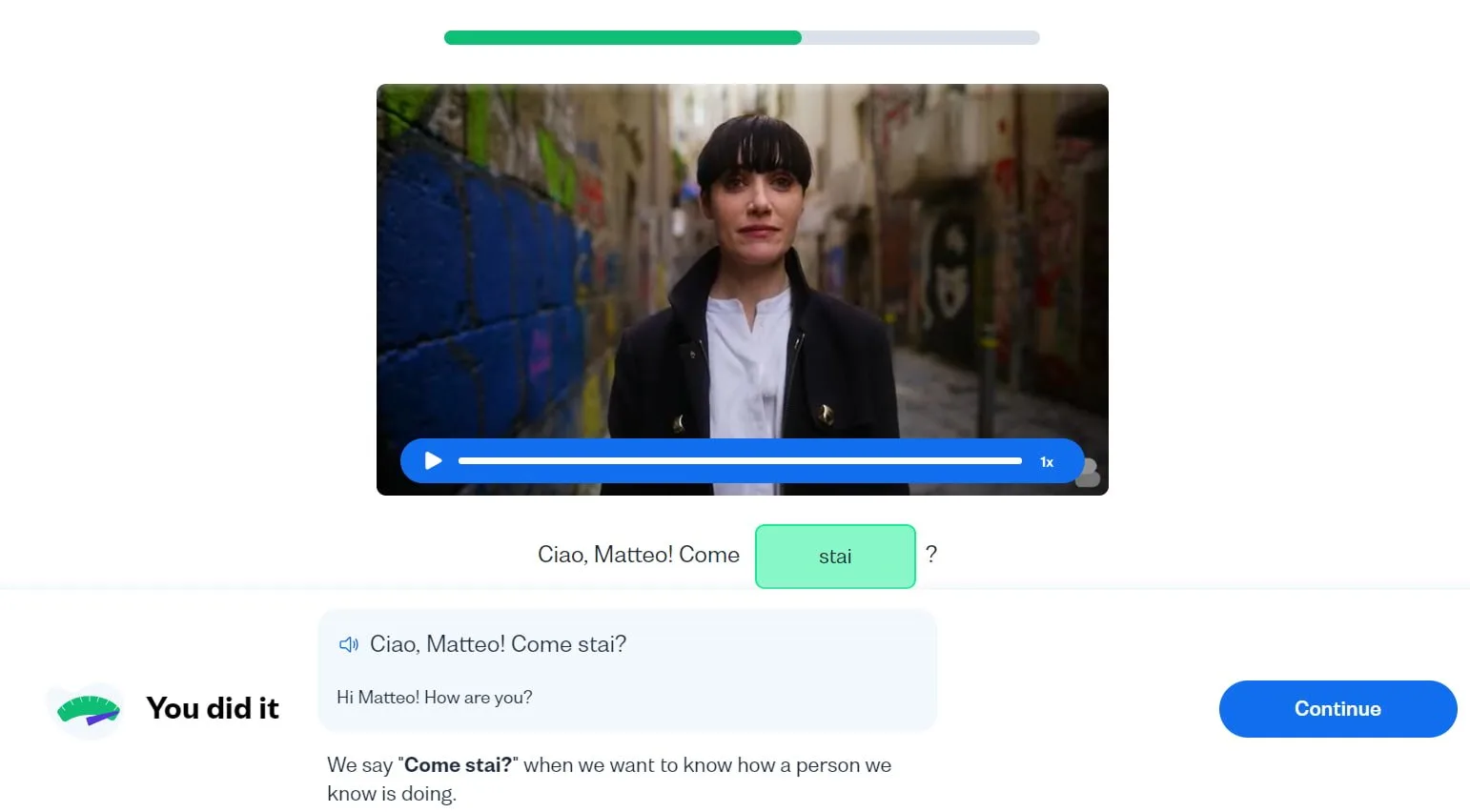
The lesson is short and concise, followed by advertisements which can be a bit disruptive.
Additional Features
The app offers specific courses like "Italian for Travel" and "Italian Pronunciation," though most of the content requires a premium subscription.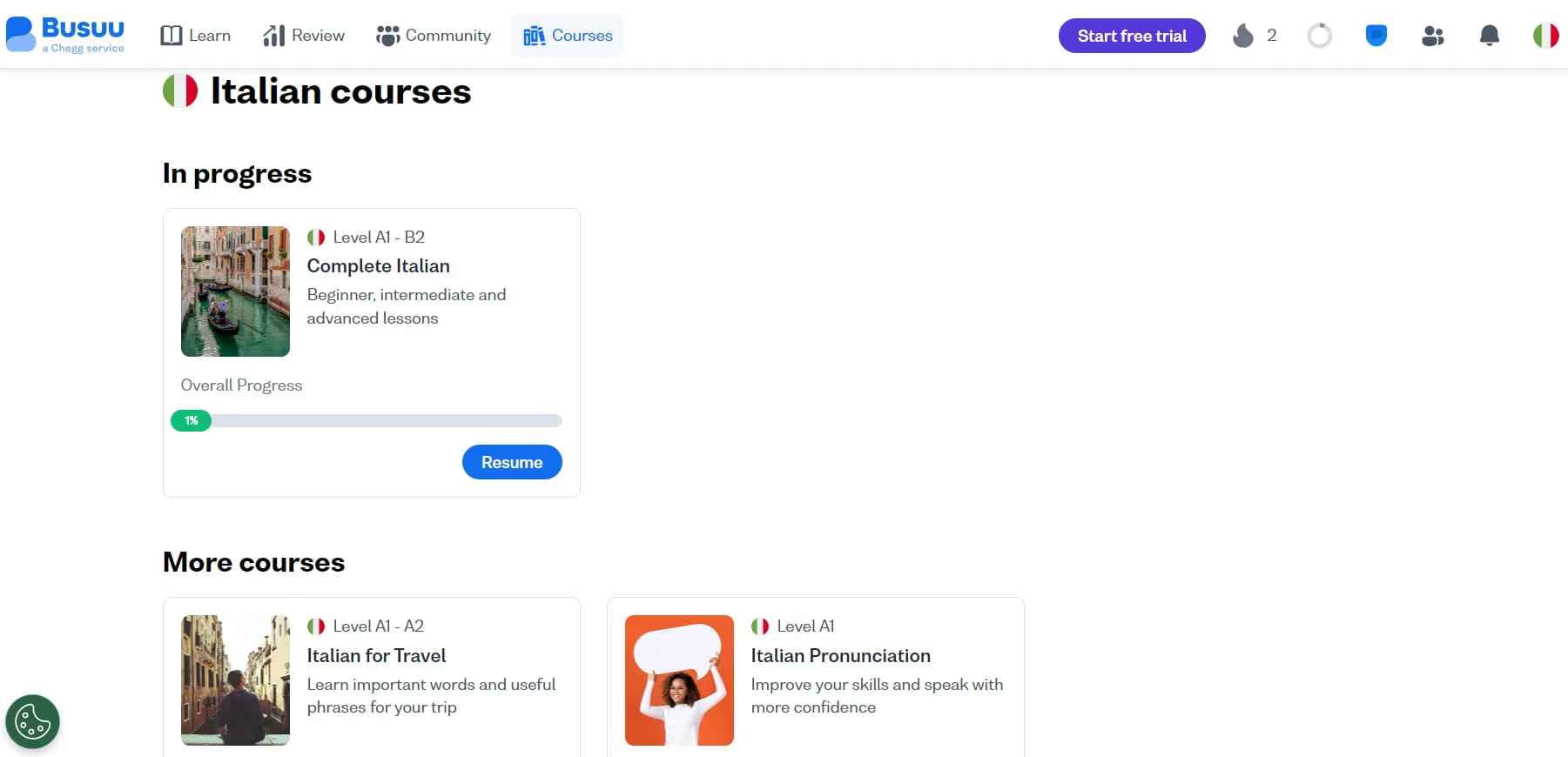
Conversation Practice
This feature encourages you to speak about provided pictures and videos and submit your recordings for review. While it's a promising concept, it would be more effective if integrated with specific lessons learned.

Leagues and Gamification
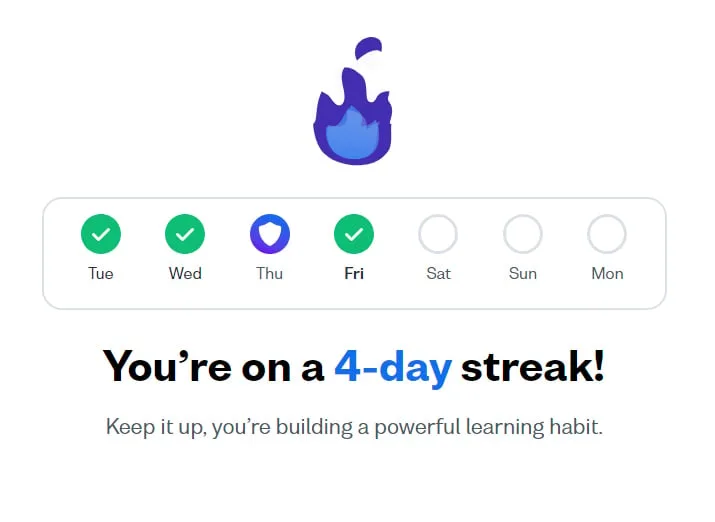
These features resemble those in other apps, like Duolingo, which heavily rely on gamified elements to promote consistent usage.

Final Thoughts
Overall, I found Busuu Italian to offer a better experience compared to some other apps due to its unique video content. However, despite these strengths, Busuu doesn't put particular emphasis on speaking exercises, and the reliance on peer feedback for corrections can be limiting.
The addition of speech recognition software and feedback from qualified teachers would significantly improve the learning experience.