
비교
이탈리아어 학습자를 위한 LingQ vs SpeakTwice
- SpeakTwice의 점수는 9/10입니다. 강점은 코스 품질, 약점은 가격입니다.
- 가장 적합한 학습자: 집중적인 반복과 실용적인 대화 연습을 통해 이탈리아어 말하기 능력을 향상시키고자 하는 학습자.
LingQ
2024년 11월 4일 · 18 features · 39 languages · 웹, iOS, 안드로이드

무료 평가판: 이용 가능; 신용카드 불필요; 0일
환불: 환불 불가
문법 노트
사용자 생성 강의
학습 경로
음성 인식
오프라인 접근
간격 반복
점수: 20/100. 어휘와 문법을 자연스럽게 습득할 수 있도록 충분한 반복을 제공하나요?
맞춤 설정
점수: 80/100. 사용자가 설정, 인터페이스, 콘텐츠 등을 맞춤 설정할 수 있나요?
학습 집중도
점수: 60/100. 인터페이스와 콘텐츠가 불필요한 요소나 게임화보다 강의 내용에 집중되어 있나요?
개인화
점수: 100/100. 자료가 자동으로 사용자의 프로필에 맞게 조정되나요?
문장 정확성
점수: 80/100. 문장에 오타나 문법 오류가 없고 자연스럽게 들리나요?
문장 적합성
점수: 80/100. 문장이 현실적이고 유용한가요?
다양성과 깊이
점수: 80/100. 주제, 형식, 수준 면에서 충분한 자료 다양성이 있나요?
오디오 품질
점수: 60/100. 녹음 품질과 말하기 속도 면에서 오디오 자료가 듣기 편한가요?
화자 품질
점수: 80/100. 화자가 정확하고 명확하며 자연스럽게 말하나요?
말하기 연습
점수: 20/100. 앱이 충분한 말하기 연습을 제공하나요?
사용 편의성
점수: 60/100. 앱 설치, 사용 및 탐색이 쉬운가요?
인터페이스 및 디자인
점수: 60/100. 사용자 인터페이스가 깔끔하고 시각적으로 매력적인가요?
성능
점수: 80/100. 앱이 빠르게 로드되고 오류나 충돌이 없나요?
개인화된 콘텐츠 가져오기 기능을 활용해 흥미로운 자료로 듣기와 읽기 연습에 집중하세요.
SpeakTwice은 사용자가 항상 이탈리아어로 말하게 만드는 유일한 앱입니다. 수백 개의 문법 강의와 듣고 따라 할 수 있는 읽기 자료, AI 튜터가 강의를 검토하고 대화를 연습할 수 있도록 도와줍니다. 전체 리뷰를 확인하세요.
LingQ 가 포함된 이탈리아어 학습자용 게시된 나란히 비교를 보거나 전체 비교 허브를 둘러보세요.
비교
비교
비교
비교
비교
비교
비교
비교
비교
처음 보면 LingQ는 많은 콘텐츠가 한꺼번에 제공되어 다소 압도적으로 느껴집니다. 콘텐츠는 미니 스토리, 어휘 강의, 인기 주제, 추천 등으로 분류되어 있습니다. 다양한 자료가 방대하게 모여 있어 초보자에게는 부담스러울 수 있습니다.
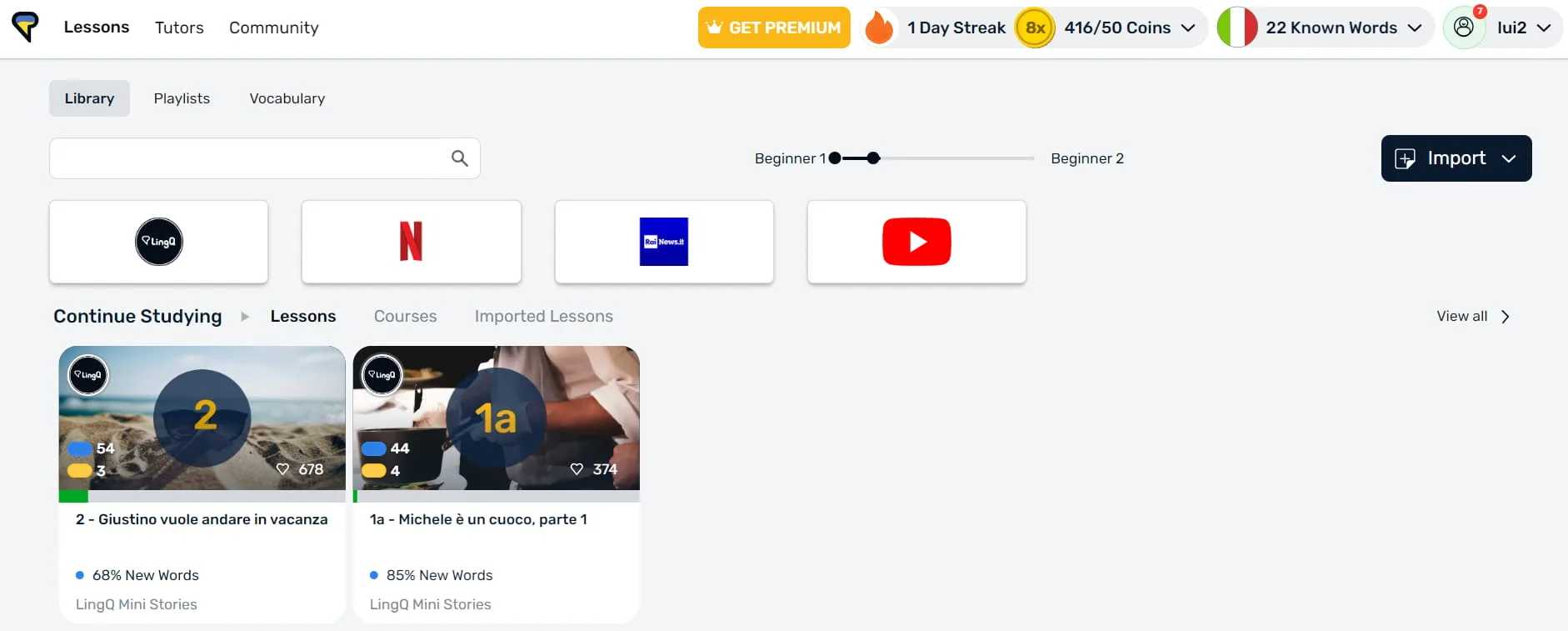
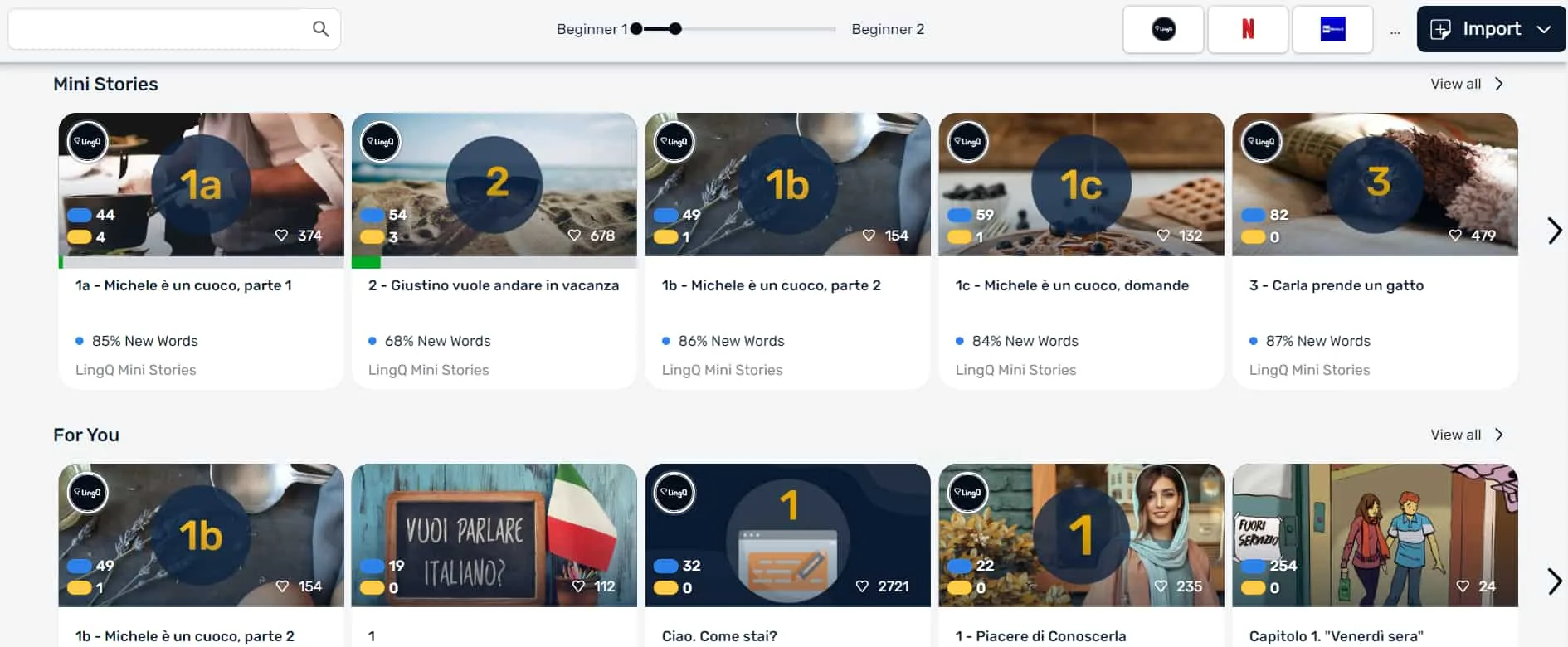
앱은 미니 스토리, 어휘 연습 등 유형별로 분류된 다양한 강의를 자랑합니다. 앱을 탐색하면서 매우 흥미로운 기능과 옵션들을 발견했습니다. 예를 들어, 강의, 전자책을 가져오거나 추가 자료를 위한 확장 기능을 통합할 수 있는 옵션이 있습니다.
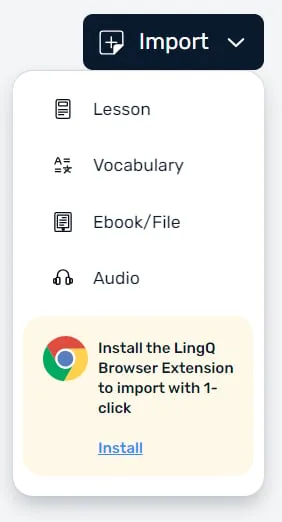
앞서 언급했듯이 가장 흥미로운 기능 중 하나는 YouTube나 Netflix에서 비디오 같은 외부 콘텐츠를 가져올 수 있다는 점입니다. 앱은 가져온 자료에 대해 대본을 생성하여 개인화되고 몰입감 있는 학습 경험을 제공합니다.
예를 들어, 어휘 섹션은 단어와 구문을 제시하지만 일관된 흐름이 부족해 다소 산만하게 느껴집니다.
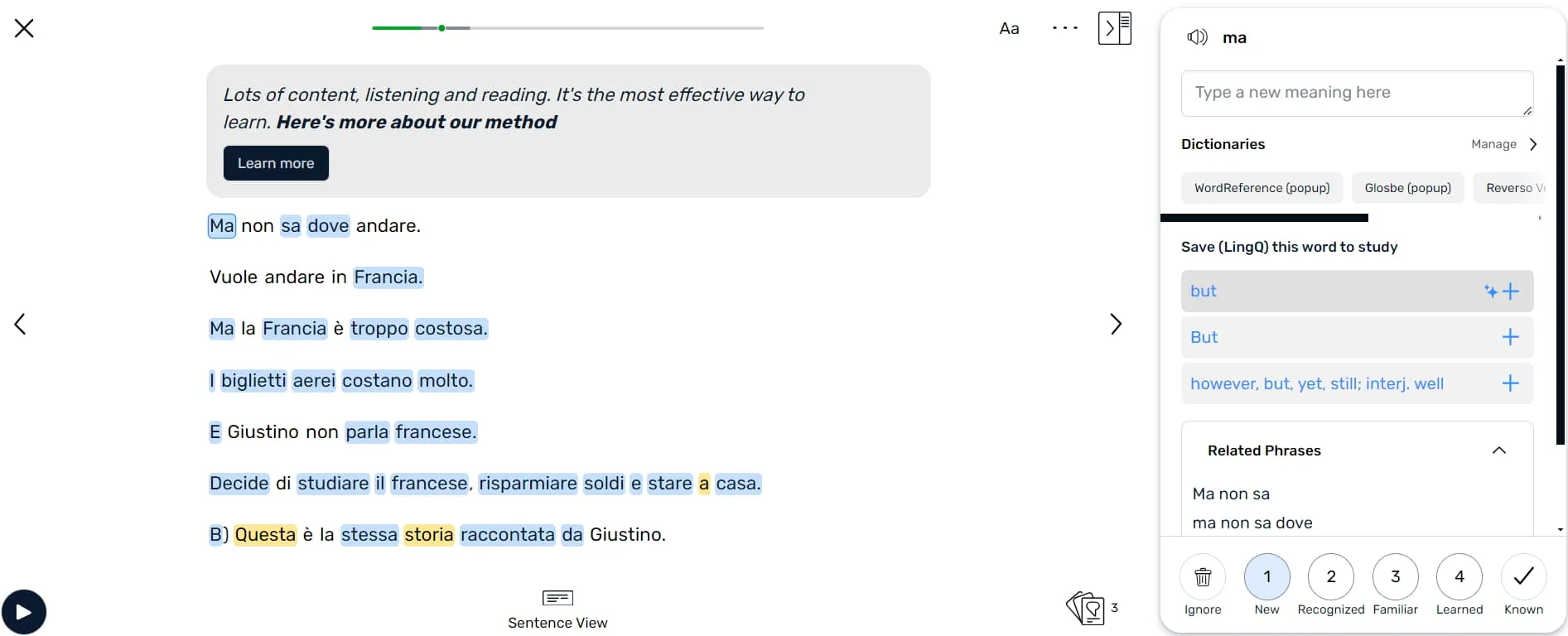
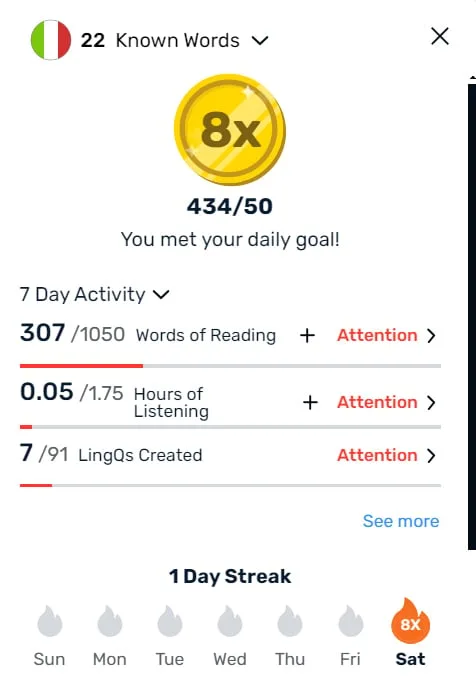
LingQ는 사용자가 강의와 활동을 완료할 때 코인을 얻는 포인트 시스템을 운영합니다.
LingQ 웹사이트에 따르면, 사용자는 포인트를 구매하거나 튜터링, 친구 추천, 라이브러리에서 강의 공유를 통해 포인트를 얻을 수 있습니다. 이렇게 모은 포인트는 현금으로 교환할 수 있습니다. 이 게임화 요소는 매력적이지만, 일반 사용만으로 충분한 포인트를 벌 수 있을지, 아니면 최대한 활용하려면 구매가 필요한지 의문이 듭니다.
가장 큰 단점은 핵심 강의 내에 말하기 연습이 부족하다는 점입니다. LingQ는 풍부한 읽기와 듣기 연습을 제공하지만, 말하기 연습 부분은 눈에 띄게 부족합니다.
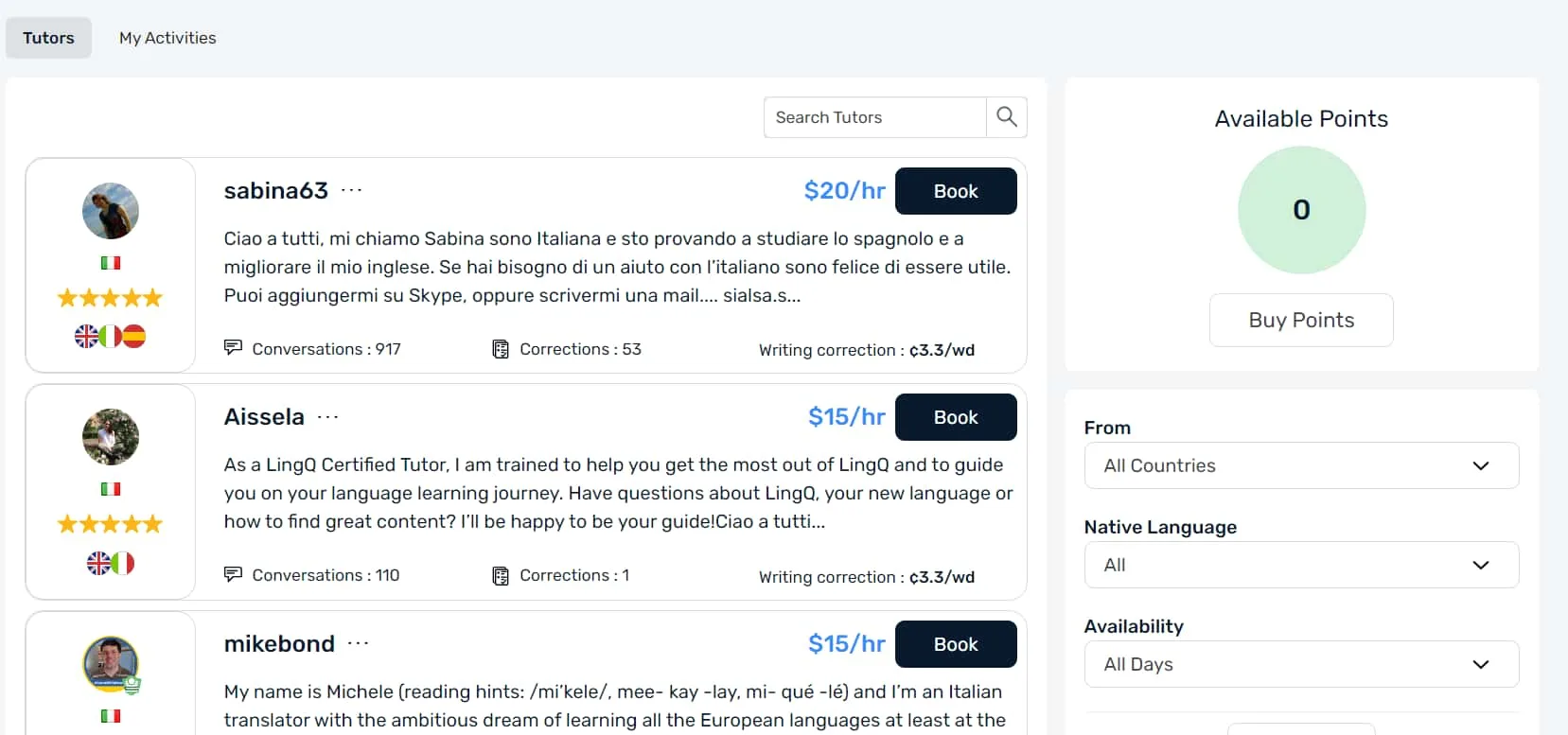
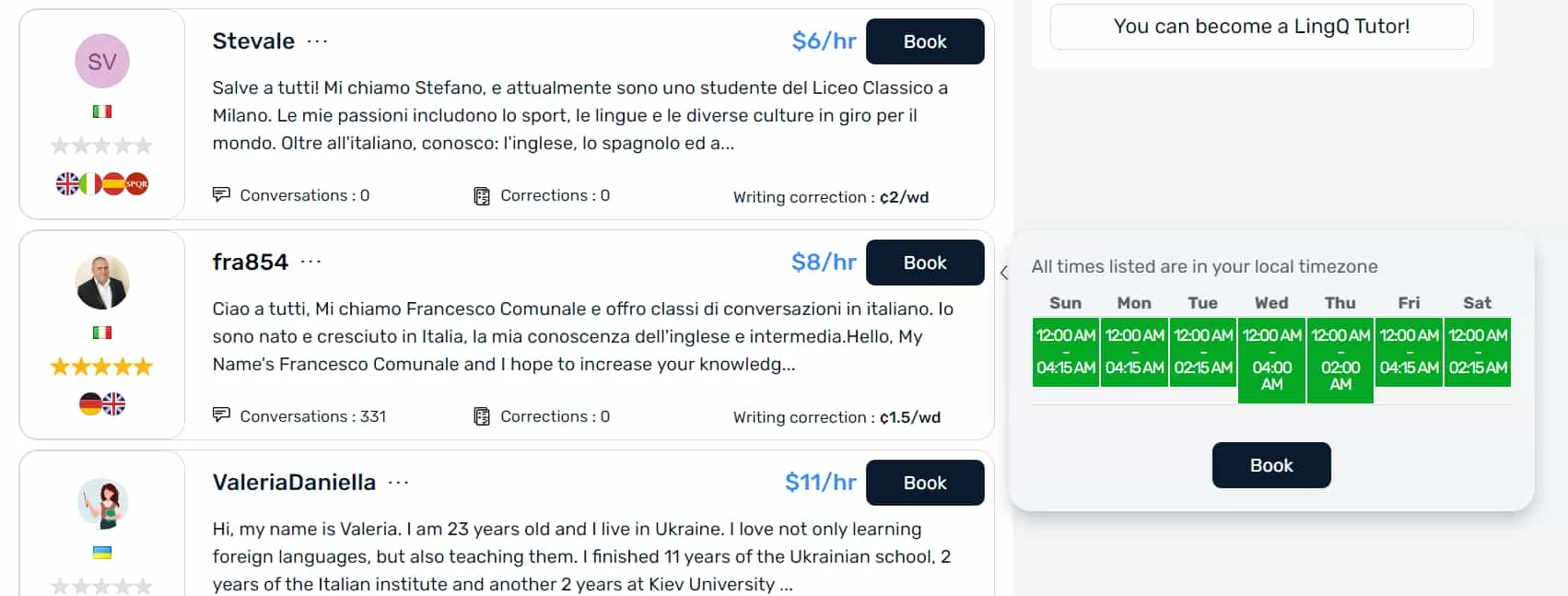
앱은 학습 세션을 위한 튜터 예약 옵션을 제공하지만, 이는 학습 과정의 필수 요소라기보다는 부가 서비스처럼 느껴집니다. 유창성을 달성하는 데 말하기 연습이 매우 중요하다는 점에서 이는 큰 단점입니다.
LingQ의 구조를 더 잘 이해하기 위해 고급 강의 중 하나를 살펴보았습니다. 일부 콘텐츠는 난이도별로 분류되어 있었지만, 자세히 보면 “고급” 태그는 주로 복잡한 자료를 의미할 뿐, 고급 학습 설계가 반영된 것은 아니었습니다.
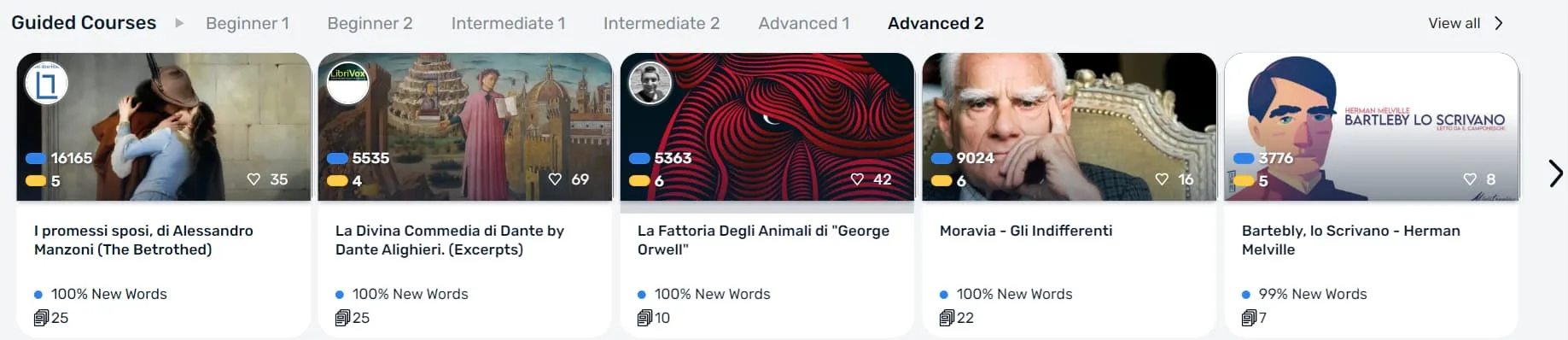
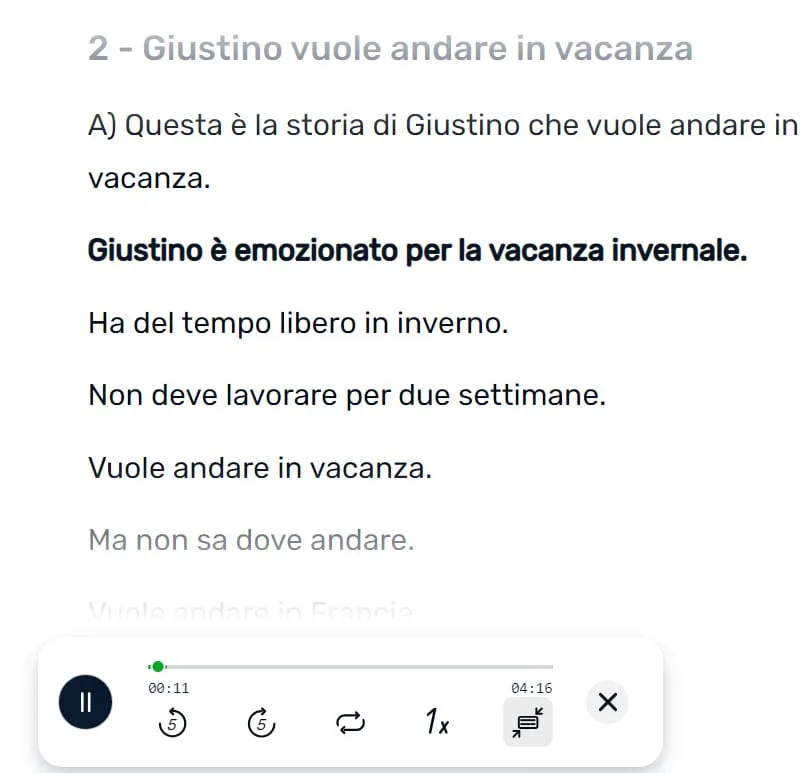
예를 들어, 고급 강의에는 전자책 전체가 포함되어 있어 사용자가 텍스트를 읽고 들을 수 있습니다. 그러나 형식은 동일하게 읽기와 듣기에 집중하며 상호작용이나 말하기 연습은 거의 없습니다. 이 방법은 어휘 확장과 이해력 향상에 효과적일 수 있지만, 능동적인 언어 사용을 장려하는 데는 부족합니다.
결론적으로, LingQ는 언어 학습자에게 유용할 수 있는 몇 가지 유망한 기능을 갖추고 있습니다. 개인화된 콘텐츠 가져오기 기능은 사용자의 흥미를 유지하는 혁신적인 아이디어입니다. 그러나 특히 말하기 연습 분야에서 개선이 절실히 필요합니다.